Honeycomb paper for 3PL and fulfilment centres: rolling it out across clients
How a 3PL can add honeycomb paper across many clients: a short material menu, wrap cards per client, billing per flat metre, and a two-week pilot.
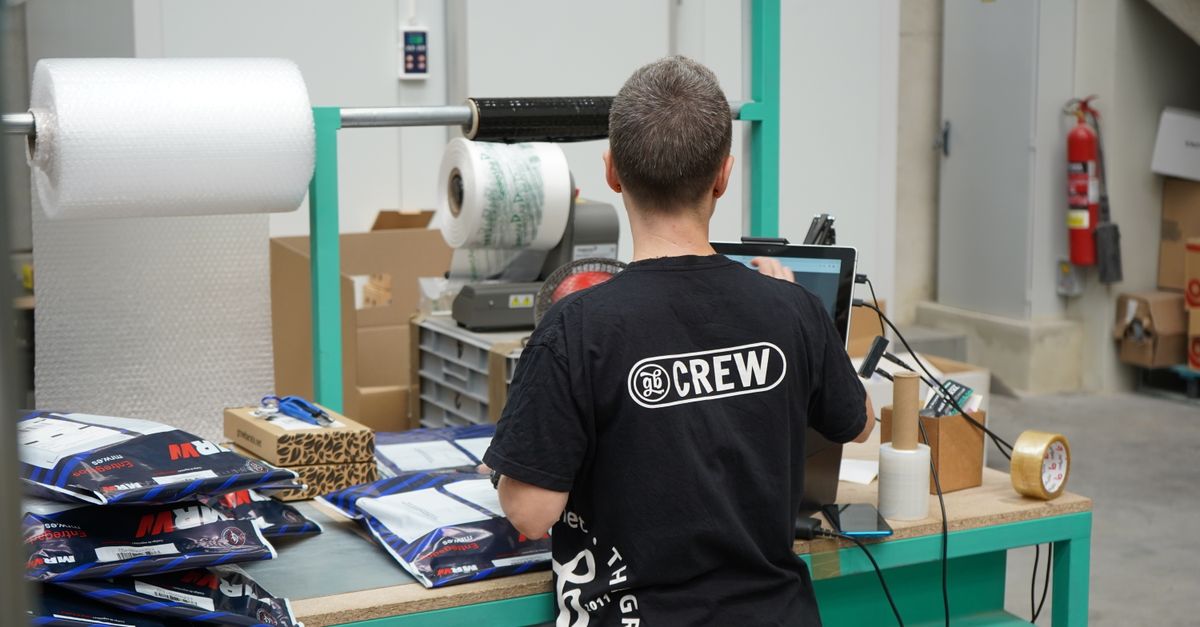
A fulfilment centre does not switch packaging once. It switches it twenty times, once for every client, and each client has its own products, its own brand rules and its own idea of what "plastic-free" means.
That is the real problem with honeycomb paper in a 3PL.
The paper itself is simple. Running it across many clients, shifts and stations is where things slip.
Here is the short answer. Give the whole building a short menu of honeycomb paper (one or two widths, one or two grades), write a wrap rule for each client's product families, put a dispenser at every station that wraps, and bill clients per flat metre or per order type. Then prove it with one client for two weeks before you offer it to the rest.
We make honeycomb paper in Jaipur and ship it to warehouses, distributors and brands in 20+ countries. We do not run a 3PL. We do see what happens to our rolls on other people's packing floors, and we hear about it when it goes wrong.
What follows is how I would set it up if I ran a 3PL floor myself.
Why is a 3PL different from a brand's own warehouse?
A brand packs its own products. A 3PL packs everyone's. That changes four things.
- Packers move between clients during a shift, so the rules must be visible at the station, not in someone's head.
- The client pays for the material, so you need a clean way to count and bill it.
- Each client has brand rules. One wants natural kraft, another wants white, a third wants no visible paper at all.
- Some clients make public claims about their packaging, and those claims depend on paperwork you hold.
A brand can get away with "use enough paper". A 3PL cannot. Twenty clients doing "enough" twenty different ways is how materials cost goes out of control.
Which widths and grades should a 3PL stock?
Stock as few as you can. Every extra width is another pallet location, another dispenser setting and another chance for a packer to grab the wrong roll.
This is how I would think about a starting menu. Treat it as an example to test, not a rule for your building.
| Station type | Typical products | Width to try first | Grade to try first |
|---|---|---|---|
| Small parcel | Jewellery, cosmetics, small bottles | 250 to 380 mm | Lighter end (50 to 70 GSM) |
| General ecommerce | Mugs, candles, boxed gifts, decor | 380 to 400 mm | Middle (70 to 90 GSM) |
| Large or heavy | Vases, planters, lamps, multi-item orders | 490 to 500 mm | Heavier end (90 to 120 GSM) |
I would expect most 3PLs to run happily on two of these rows.
The middle row covers a surprising share of ecommerce orders.
For US floors, the same thinking applies to 12, 15 and 20 inch rolls.
One more thing on grade. A lighter grade looks cheaper per roll, and on a big client that is tempting. I would test it on the client's heaviest common item before agreeing. Weak paper tears at the slits, packers wrap twice to feel safe, and the metres per order go up. We see buyers learn this the expensive way, switch to a cheaper roll, and then come back.
How do you write wrap rules for each client?
Write them per product family, not per SKU. A client with 800 SKUs usually has five or six families that pack the same way.
Each rule needs four things:
- The product family, with a photo of one typical item.
- Width and grade of roll to use.
- Sheet length and number of layers (for example, "one sheet of about 60 cm, two turns, ends tucked").
- Anything extra, such as tissue on glossy finishes, a divider between items, or void fill around the wrapped item.
Print it on a card at the station. Put the same text in the client's pack instruction in your warehouse management system, so it pops up on the packer's screen with the order.
I would ask the client to sign off the card. When a damage claim comes later, you want to show that you packed to the agreed rule.
How should a 3PL bill honeycomb paper?
Bill on something you can measure. Two methods work.
The first is per flat metre. Flat metres are the length of paper before it is pulled open, and they are what the roll label states. You measure consumption with a roll count, i.e. note the orders packed between putting a fresh roll on and taking the empty core off. Our guide on working out honeycomb paper per order has the full method and a worked example.
The second is a fixed wrap charge per order type. Once you have two or three weeks of roll counts, you know roughly what a "small fragile" or "two-mug" order uses, and you can price it as a flat add-on.
Do not bill on expanded metres.
They change with every packer and every dispenser, so the client will never be able to check your number. We quote our own rolls in flat metres for the same reason.
Worked example: one client, two weeks
Say a 3PL takes on a candle brand that ships 300 orders a day, and the brand wants to drop bubble wrap. These numbers are invented for the example. Use your own.
- Day 1: one station is set up with a 400 mm roll on a table-top dispenser, and the wrap card for "single jar candle" and "gift set of three".
- Days 1 to 3: two trained packers handle all of the brand's orders. Every new roll gets a sticker with the date and the order count.
- Days 4 to 10: the brand's orders move to three stations. A supervisor checks ten random parcels a day against the card.
- Days 11 to 14: the 3PL counts rolls used, damage reports from the brand's customer service, and the average pack time per order.
At the end, the 3PL has a real number for flat metres per order, a damage figure to compare with the old bubble wrap period, and a pack-time figure. That is enough to price the service and to offer it to the next client.
Where do the rolls live?
Honeycomb paper travels flat, so a pallet of rolls holds a lot of wrap for the space. Our 250 m roll is measured flat and opens to about 400 m with our cut. Still, it is paper, and paper hates damp.
I would keep the bulk stock in one dry location away from dock doors, issue rolls to stations per shift, and use oldest stock first. Paper left beside an open dock door through a wet season comes out weaker than it went in. Our note on storage and humidity explains why.
Client-owned rolls need their own labelled location.
Mixed stock is how one client ends up paying for another's paper.
What about FSC claims for clients?
This one catches 3PLs out.
If you buy FSC-certified honeycomb paper and resell it to clients as part of your service, the FSC claim stops with you unless you hold your own FSC chain of custody certificate. A claim only travels on invoices between certified companies, and the FSC chain of custody standard (FSC-STD-40-004 V3-1, effective 2 May 2021) sets out how. Without your own certificate, your client cannot say their packaging is FSC certified on the strength of your invoice.
There are two clean options. The client buys the paper directly from a certified supplier and you pack with it. Or you get certified yourself. Our article on what you can honestly say about recycling and FSC covers the wording.
Where honeycomb paper is the wrong choice
I will be honest about the limits, even though we make the stuff. Honeycomb paper wraps and cushions. It does not fill empty space in a big box by itself, and it is not waterproof.
For a heavy item with sharp metal corners, or goods that will sit in a wet yard, test hard before you switch that client. Some of your clients will still need air pillows or other materials for certain products. A 3PL that offers honeycomb as one option, used where it fits, keeps more clients happy than one that forces it on everything.
How to start
- Pick one client who has asked for plastic-free packing and has mostly fragile, mid-weight items.
- Agree the wrap cards with them, and the billing method, before the pilot starts.
- Set up one or two stations with dispensers. Our guide to honeycomb paper dispensers compares the types.
- Run two weeks with roll counts and damage tracking.
- Share the numbers with the client, then with your sales team.
If you also want the rolls under your own 3PL brand, with your codes on the cartons, that is possible too, and our private label page explains how it works.
Send us your station count, your main client categories and a rough monthly order volume through our contact page. We will suggest two widths and grades to trial, and we will send samples for the pilot. We would rather you test us on one client than promise all twenty on day one.
Questions buyers ask
Do 3PLs normally charge clients for packing materials?
Most do, either as a line item per box and per metre of wrap, or folded into a pick and pack fee. I prefer a separate line for honeycomb paper at the start, because it lets the client see what the switch really costs per order. You can fold it into the fee later, once the numbers are stable.
Can a 3PL use paper the client buys directly?
Yes, and some clients will insist on it, often because their own supplier carries the FSC claim. The catch is space and mix-ups. Keep client-owned rolls on a labelled pallet location, and never let a packer borrow them for another client's orders.
Will honeycomb paper slow down our packers?
For the first few days, usually yes, while people learn the pull and the tuck. After that it is mostly about the dispenser. A table-top dispenser at each station, set to the right tension, removes most of the fumbling. Hand-pulling from a loose roll is where the time goes.
Does honeycomb paper work with automated packing machines?
Some automatic dispensers expand and cut honeycomb paper on their own, which suits high-volume stations. I would still start manual. Learn your sheet lengths and layers by hand first, then decide if a machine pays for itself.