Shipping for craft beverage brands: bottles, multipacks and gift sets
How craft beer, cider, spirits and soft drink brands can pack bottles, multipacks and gift sets for courier: carrier rules, leaks and honeycomb wrap.
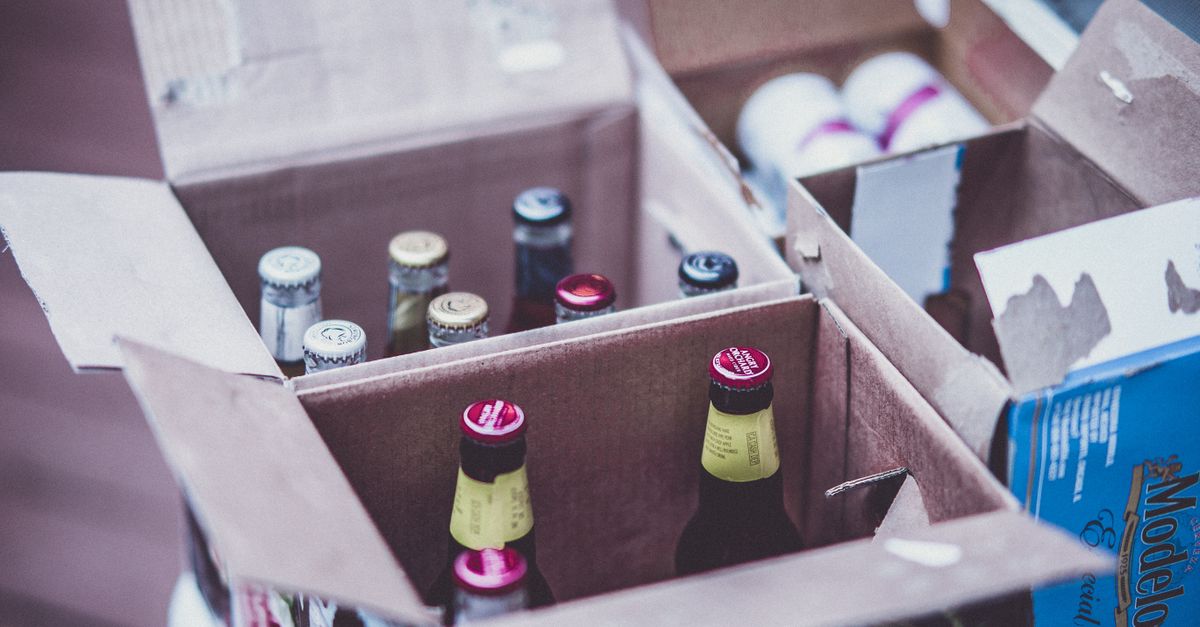
A craft brewery, cidery or small distillery that starts selling online learns fast that liquid in glass is the hardest thing to send by courier. It is heavy, it breaks, and when it breaks it soaks every other parcel in the van.
Then there are the rules.
Alcohol has more of them than almost any other product.
So here is the short answer. Check your carrier's alcohol rules first, because they decide what you may send and sometimes how it must be packed. Then wrap every bottle separately in honeycomb paper, keep glass from touching glass with dividers or wrap, fill every gap, and add a sealed bag where the carrier asks for leak protection. Test with full bottles and corner drops before your first real order.
We make honeycomb paper in Jaipur. We do not make drinks, so I will keep to the packing and point you to the carriers' own rules for the rest.
What rules apply before you pack anything?
Each carrier and country has its own. Two examples show how different they can be.
- In the US, UPS says on its own help pages that it carries wine, beer and spirits only for shippers who are licensed and who have signed a contract with UPS for it (UPS: how to ship wine, checked October 2026).
- In the UK, Royal Mail Wholesale's restricted goods list for Access customers allows drinks such as beer, lager, wine and champagne up to 24% ABV, and prohibits anything stronger. It asks for each item to be wrapped in polythene and sealed with tape, surrounded with absorbent material and enough cushioning to protect it, at no more than 1 litre per item, and marked "FRAGILE" when glass bottles are sent.
These are only two carriers. Your carrier, your country and your licence may say something different.
I would get the rule in writing from your own carrier before you design the pack.
Notice one detail in the Royal Mail rule. It asks for a polythene bag around the bottle as well as cushioning. Honeycomb paper is the cushioning part. It does not replace the bag where a carrier asks for one.
How should you pack a single bottle?
Wrap it fully, from the base to above the neck, with the paper stretched so the cells open.
- Bag the bottle first if your carrier asks for it, with absorbent material inside.
- Wrap it in honeycomb paper, with three turns as a starting point for a standard bottle. Test more for heavy or thin glass.
- Twist or fold the paper over the neck and the base, so the ends of the bottle are covered too.
- Put it in a box that is only a little bigger than the wrapped bottle, with paper at the bottom and top.
- Shake it. If it moves, add fill.
The neck and the base are where bottles usually fail in a drop.
Do not leave them bare.
Our step-by-step guide on how to wrap glass bottles with honeycomb paper shows the wrap in more detail, and our explainer on how honeycomb paper protects a product covers why the stretch matters. Wineries have their own article on shipping wine bottles.
Multipacks, mixed cases and gift sets
The more bottles in a box, the more ways it can go wrong. I have more respect for a well-packed 12-bottle case than for most luxury packaging.
| Pack type | Protection plan | Common failure |
|---|---|---|
| Single bottle | Full wrap, snug box, top and bottom cushion | Neck exposed, box too big |
| 3 to 6 bottles | Wrap each bottle, cardboard dividers, fill gaps | Bottles touching through thin wrap |
| 12 bottles | Dividers essential, wrap each, double-wall carton | Carton too weak for the weight |
| Gift set with glasses | Wrap glasses separately, paper inside each glass, separate from bottle | Glass rims chipped by the bottle |
| Mixed cans and bottles | Wrap the bottles, cans can sit as fill around them | Cans denting bottle wrap flat |
For multipacks, I would always use dividers as well as wrap. A wrapped bottle next to another wrapped bottle still knocks, and the wrap between them wears thin after a long journey.
Weight matters too. A 12-bottle case of full glass is heavy for a corrugated box. Ask your box maker for a carton rated for the weight, and tell them it ships by courier, not on a pallet.
Which honeycomb grade and width suit bottles?
Bottles are heavy for their size, so lean towards the middle and heavier grades.
Our honeycomb paper runs from 50 to 120 GSM. For full glass bottles, I would test something in the middle of that range first, then a heavier one, and compare drops. A light paper may wrap nicely but collapse under a heavy bottle.
For width, a roll a little taller than your bottle saves folding. A 380 or 400 mm roll covers most standard bottles in one sheet. Narrow rolls of 100 to 250 mm suit small bottles, miniatures and sleeves around necks.
Hot and cold weather
Drinks react to temperature. Beer in a hot van can build pressure, and a frozen bottle can crack.
Packaging cannot fix that. Layers of paper may soften a quick temperature swing a little, but I would not rely on them. Plan your shipping days around the weather in peak summer, and avoid parcels sitting over a weekend in a hot depot.
Honeycomb paper itself does not like damp. We make and store ours in a moisture-controlled plant for that reason, and we wrap every roll off the line. A cold bottle taken into a warm, humid room can sweat, and wet paper loses its cushion. Pack bottles at room temperature where you can.
Worked example: a brewery's first online orders
Say a small brewery launches online with three formats: a single 750 ml bottle, a 6-bottle case and a gift set of two bottles and a glass. The numbers are made up for the example.
- They confirm with their courier that they can ship beer under their licence, and what bagging the courier asks for.
- Single bottle: bagged, three turns of 400 mm honeycomb paper, snug box.
- 6-bottle case: each bottle bagged and wrapped, cardboard dividers, honeycomb at top and bottom.
- Gift set: the glass gets paper inside and a separate wrap, and sits in its own section away from the bottles.
- They pack five of each with full bottles, drop each box on a corner, an edge and a face from about knee height, and open them.
- They change one thing after the test: an extra layer at the bottom of the 6-bottle case.
Testing with full bottles costs a few bottles of beer. Testing with empties tells you nothing, because an empty bottle weighs a fraction of a full one.
Where we fit
We run honeycomb paper on multiple lines in Jaipur, in natural kraft, white, black and several colours, in widths from 100 to 500 mm and grades from 50 to 120 GSM. Every lot is checked for GSM, moisture and cut quality before it leaves Jaipur. Our products page lists the sizes. To budget paper for each pack format, use the method in our guide on working out honeycomb paper per order.
I will be honest about the limit. Honeycomb paper protects the bottle. It does not make a parcel leak-proof, and it does not change what your carrier allows.
If you ship bottles, send us your bottle sizes, pack formats and monthly volumes through our contact page. We will suggest a width and grade and send samples, so you can run the full-bottle drop test before you commit. We test our own samples for strength, drops and dispenser use before they go out. Your test with your bottles is the one that counts.
Questions buyers ask
Can I ship beer bottles by courier?
Often yes, but it depends on the carrier, the country and your licence. Some carriers carry alcohol only for licensed shippers under contract, and postal services set their own limits on strength and volume. Check the carrier's own rules in writing before you plan the pack.
Are cans easier to ship than bottles?
Yes. Cans do not shatter and weigh less, though they dent and can leak at the seam if crushed. That is one reason some brands choose cans for online sales. If your product is in glass, plan for more protection per unit.
How do I stop a leaking bottle ruining the whole parcel?
Put each bottle, or the group of bottles, in a sealed plastic bag before wrapping, with something absorbent around it. Royal Mail Wholesale asks for exactly this on drinks. Honeycomb paper then cushions the bagged bottle. Paper alone will soak up a little, but it will not hold back a broken bottle's contents.
What is the best box for shipping six bottles?
A strong double-wall carton sized so the wrapped bottles fit snugly, with a divider between each bottle. Too big and they move, too small and the wrap is crushed flat. Test a packed box with full bottles before you buy a thousand.