Can honeycomb paper touch food? What the rules say and what to check
When honeycomb paper is fine around packed food, why direct contact needs proof, and what EU, US and Indian rules ask you to check before food touches it.
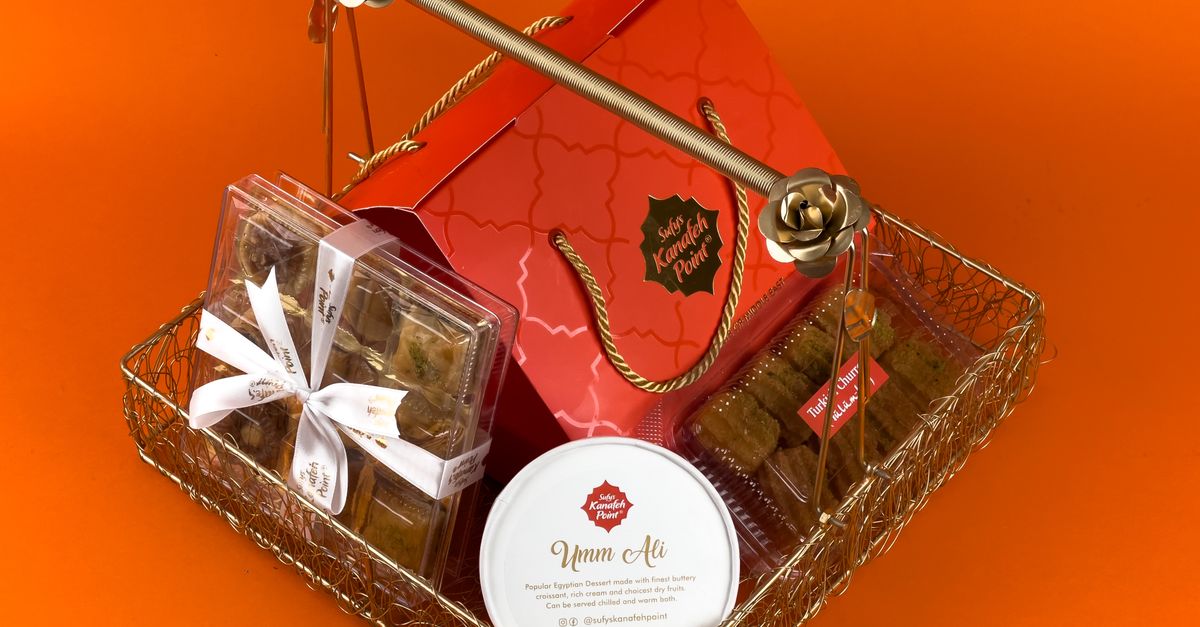
Picture a hamper of fruit, biscuits and bread, lined with brown honeycomb paper. It looks natural, it is kraft, and kraft feels like food paper.
So can it touch the food?
Honeycomb paper is fine around packed food: sealed jars, bottles, tins, wrapped chocolates and bagged bakery. Unwrapped food touching the paper is a different matter, because that needs documented evidence that the paper suits that food, in that market, under those conditions. We sell our honeycomb paper as protective packaging, so I will not call it food-safe or food-grade. If food has to touch something, put a documented food-contact layer between the food and the honeycomb.
That answer can sound overcautious.
Let me explain where it comes from.
Packed food or unwrapped food: where is the line?
The line is direct contact. If the food sits inside its own sealed pack, the honeycomb protects that pack and never touches the food.
| Situation | Does food touch the honeycomb? | My view |
|---|---|---|
| Sealed glass jar, bottle or tin | No | Fine. This is a normal use of honeycomb |
| Chocolates in foil or flow wrap, inside a box | No | Fine. Watch odour and heat, not contact |
| Biscuits or bakery in a sealed bag | No | Fine |
| Fruit placed loose in a hamper on a honeycomb bed | Yes | Not without food-contact evidence. Use a documented liner |
| Loose sweets, nuts or bread on the paper | Yes | No, unless the paper is documented for that food |
| Dry food in a thin pack, stored for months in a box with recycled paper | Indirect, through the air | Take care with long storage. See the mineral oil point below |
Many food sellers never need to cross that line, because they ship jars, bottles and boxed goods. Our guide to packing jam, honey and pickle jars is a good example of the normal use.
Why is "it is only paper" not good enough?
Because food rules care about what can move out of the paper into the food, and paper made for packing goods is usually not checked for that.
- Recycled fibre can carry traces of whatever the old paper carried, including printing inks. The usual FSC claim on our honeycomb paper is FSC Recycled, which means 100% recycled fibre. That is good for the forest. It is also the reason to be careful near unwrapped food.
- Mineral oil from inks can travel without touching. The European Food Safety Authority, in its 2023 update of the risk assessment of mineral oil hydrocarbons in food, notes that these hydrocarbons can pass from paperboard into dry foods through the gas phase, i.e. through the air inside the pack.
- Coloured paper adds dyes. Our post on coloured honeycomb paper explains the European test for colour bleeding into food.
- Paper picks up smells and dust in a careless store, and food picks them up from the paper.
None of this means honeycomb paper is dirty.
It means nobody has shown it is suitable for food, and in food that is the standard.
What do the rules say in each market?
Each market has its own law, but they share one idea: the material must not pass anything into the food that harms health or changes the food. I have read the official texts. Your own regulatory adviser should still confirm them for your product.
| Market | Main rule | What it means for paper |
|---|---|---|
| European Union | Regulation (EC) 1935/2004 and Regulation (EC) 2023/2006 on good manufacturing practice | General safety rules apply. There is no EU-wide specific measure for paper and board, so national rules and guidance fill the gap |
| United States | FDA, 21 CFR Part 176 | Lists substances allowed in paper for aqueous and fatty foods (176.170) and dry foods (176.180) |
| India | FSSAI Food Safety and Standards (Packaging) Regulations, 2018 | Paper in direct contact must be food grade, meet listed Indian Standards, and carry a certificate of conformity |
European Union
The European Commission page on food contact materials legislation lists the materials with specific EU measures: plastics, ceramics, regenerated cellulose film, and active and intelligent materials. Paper and board are not on that list. They fall under the general rules of the framework regulation: no release of constituents at levels harmful to health, and no unacceptable change to the composition, taste or odour of the food.
In practice, buyers lean on other guidance. Germany has BfR Recommendation XXXVI for paper and board in food contact. The Council of Europe adopted Resolution CM/Res(2020)9 in 2020, and its EDQM published a technical guide on paper and board in 2021. A material sold for food contact in the EU should also carry the words "for food contact", a specific use, or the glass and fork symbol.
United States
The FDA lists what paper and paperboard for food contact may contain. 21 CFR 176.170 covers aqueous and fatty foods and 21 CFR 176.180 covers dry foods. Recycled fibre is not banned. 21 CFR 176.260 allows pulp from reclaimed fibre, but excludes salvage that carried poisonous or harmful substances. A supplier selling into US food contact should be able to say which sections the paper meets.
India
The FSSAI Packaging Regulations, 2018 (compendium Version II, 1 February 2022) are more direct. Paper meant to touch food must be food grade and free from contaminants. Schedule I lists Indian Standards for paper and board, including IS 6615 for general purpose packing or wrapping paper. Newspaper must not be used to store or wrap food, and a printed surface must not touch food. Every food business must obtain a certificate of conformity from a NABL accredited laboratory for packaging that comes in direct contact with food.
What should a buyer ask for before food touches any paper?
Ask for documents, not adjectives.
"Food safe" on a website is an adjective.
- A declaration of compliance that names the regulations of your market.
- The food types it covers (dry, fatty, moist or acidic) and the conditions (contact time and temperature).
- Test reports from an accredited laboratory, dated, for the same paper grade you are buying.
- For recycled fibre, mineral oil test results.
- For coloured paper, a colour-fastness test.
- A lot number on each roll that matches the documents.
If a supplier cannot produce these, the paper is not documented for food, whatever the brochure says. That applies to us as much as to anyone.
The simple rule for your packing bench
Food touches only materials documented for food. Honeycomb paper goes outside that layer.
For a hamper of fruit, line the basket with a documented food-contact paper or film and build the honeycomb nest underneath or around it. For loose bakery, bag it first. For chocolates and confectionery, the foil or flow wrap is already the barrier, and our post on packing chocolate gift boxes covers heat and odour.
Where we stand
We make honeycomb paper in Jaipur under an FSC chain of custody certificate, and we test every lot for GSM, roll weight, moisture and cut quality. Those checks make a reliable protective wrap. They are not food-contact testing, and I would rather tell you that here than have you find out from an inspector.
If your project genuinely needs paper for direct food contact, write to us through our contact page with the food, the market and the use. We will tell you plainly what we can and cannot document before anyone talks about price.
Questions buyers ask
Is brown kraft paper food safe?
Some is and much is not. Colour tells you nothing. A kraft paper made and documented for food contact can be suitable for the foods its documents name. A kraft paper made for packing goods has simply not been checked for that, so treat it as unsuitable until someone shows you evidence.
Can I wrap bread, cakes or sandwiches in honeycomb paper?
Not directly. Put the food in a wrap or bag made and documented for food contact first, then use honeycomb outside it if the parcel needs cushioning.
Does FSC certification mean the paper is food safe?
No. FSC is about where the fibre came from and how it was tracked through the supply chain. It says nothing about food contact.
How do I know if paper sold in Europe is meant for food?
Look for the words "for food contact", a specific food use on the label, or the glass and fork symbol. Ask for the declaration of compliance as well. If none of these exists, I would assume the paper was not made for food.