Packing chocolate and confectionery gift boxes for courier
Ship chocolate gift boxes so they arrive whole: what heat does at each temperature, how to wrap the box, and why honeycomb paper is not insulation.
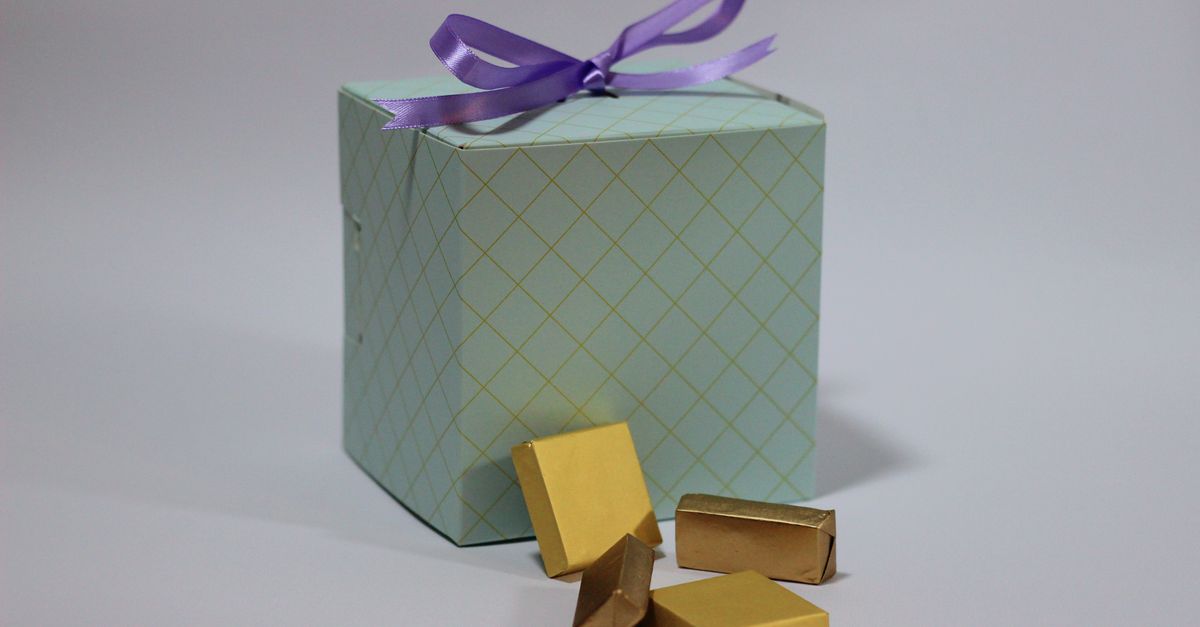
A box of chocolates can survive a hard drop and still be ruined by one afternoon in a hot van.
That is the hard truth of shipping chocolate.
To ship a chocolate gift box, protect it from two things separately. For knocks, wrap the closed gift box in honeycomb paper, cover the corners, and pack it snugly in an outer carton so it cannot slide. For heat, use the season, the route and, on warm routes, an insulated liner with cold packs, because paper wrap is not insulation. Keep chocolate away from strong smells, which it absorbs.
Since we make honeycomb paper, I am happy to say what it does well here.
Stopping melting is not on that list.
What damages a chocolate gift box in transit?
- Heat, which softens the chocolate and leaves bloom.
- Moisture and condensation, which leave a sugary white film.
- A crushed lid or corner, which looks careless even if the chocolates survive.
- Chocolates jumping out of their cups when the box is turned or dropped.
- Foreign smells, from whatever travels in the same parcel or van.
Honeycomb helps with the third and fourth. I would plan the first, second and fifth separately.
How hot is too hot for chocolate?
Chocolate starts to suffer well below its melting point. We tend to forget that. The Transport Information Service of the German Insurance Association gives these figures on its cargo page for chocolate:
| Temperature | What happens, according to TIS |
|---|---|
| 10 to 18 °C | Favourable travel temperature, with 65 to 70% relative humidity |
| 21 °C | Chocolate starts to deteriorate in appearance and taste |
| 24 °C | It becomes soft. Slabs, hollow figures and filled chocolates deform |
| 28 °C | Melting point. Fat separates and sets again as fat bloom, a grey to grey-blue coating |
The same page explains sugar bloom. Moisture dissolves sugar on the surface, and when the water evaporates the sugar stays behind as fine crystals. So a wet or sweating box spoils chocolate as surely as a hot one.
24 °C is an ordinary spring afternoon in many places.
Inside a parked delivery van, it is easy to pass.
How do you pack the gift box itself?
Keep the chocolate inside its own box and insert. Then we wrap the closed box, not the chocolate.
- Check that every chocolate sits in its cup or insert. Fill any space under the lid with a soft pad of glassine or tissue, so nothing can lift and turn over.
- Close the lid and keep the box flat, lid up, from here on.
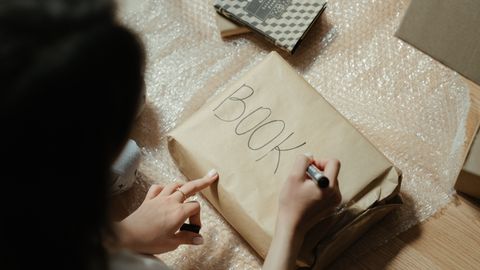
- Wrap the closed box in one or two turns of honeycomb paper, 60 to 80 GSM, with extra paper over the corners.
- Put it in an outer carton with room on every side, and fill the space with void fill.
- Mark the carton "this way up". Some handlers will follow it.
The honeycomb never touches bare chocolate. The foil, flow wrap or box is the barrier, as I explain in can honeycomb paper touch food. For the order of wrap and fill, see using honeycomb wrap with void fill.
A dark box in black honeycomb looks very good on a premium brand. Our post on black honeycomb paper covers when it works.
What about warm routes and summer?
Plan for heat with insulation, cold packs and timing.
Paper wrap is not part of the heat plan, and we would never sell it as one.
- Ship on routes and days that avoid a weekend in a depot.
- Use an insulated liner inside the outer carton on warm routes.
- Add cold packs, each in its own bag, never touching the gift box directly.
- Keep the honeycomb-wrapped gift box in the middle, so it does not slide against a cold pack.
- In the hottest weeks, consider pausing courier shipping altogether. I think that is a perfectly sound decision, not a failure.
Cold packs bring their own risk: condensation, when a cold surface meets warm air. Our note on honeycomb paper in cold and wet conditions explains how to keep that moisture off the wrap and the box.
Why does odour matter so much?
Chocolate takes on the smell of what is near it. It is the same with tea, as we explain in our guide to packing coffee and tea gift sets.
The same TIS page says all cocoa products absorb foreign odours very easily and must be stored and transported in odour-free conditions. So do not pack chocolate next to soaps, candles or diffusers, store honeycomb rolls away from solvents and fuel, and smell a fresh pull of paper before the season starts.
How should other sweets be packed?
The principle stays the same: protect the sealed pack, not the food inside it.
| Product | Main risk | How to pack |
|---|---|---|
| Boxed pralines or truffles | Heat, pieces jumping out of cups | Pad under the lid, wrap the closed box, keep it flat |
| Chocolate bars | Heat, snapped bars | Stack flat, one turn around the stack |
| Hollow figures | Crush and heat | Rigid box, honeycomb around the box, generous space |
| Hard sweets in a glass jar | Glass breaks | Tape the lid, two turns of 80 GSM, upright |
| Fudge or toffee | Softens, sticks | Sealed pack, one turn, short transit |
| Mithai with ghee or milk | Short shelf life, oil marks | Sealed food pack first, honeycomb outside, quick delivery |
Diwali and Christmas both bring a rush of sweet gift boxes. In India, Diwali usually falls in October or November, when much of the country is still warm.
I would plan the heat side as seriously as the packing.
Worked example: a praline box in a southern summer
Picture a chocolatier in Melbourne shipping a 16-piece praline box in December, which is summer there. These numbers are an example only.
The plan is simple. Each box gets a glassine pad under the lid and one turn of black 60 GSM honeycomb. It sits in the middle of an insulated liner with two bagged cold packs, one on each side, separated from the box by a layer of void fill. Orders go out early in the week by express only.
Before Christmas orders open, the chocolatier sends three test boxes to friends in the warmest suburbs on a hot day. When they arrive, the friends photograph the chocolates before touching them. Any bloom means the plan needs more insulation or a faster service. A good wrap will not fix that.
We make honeycomb in black, white, natural brown and several colours, in widths from 100 to 500 mm, so most gift boxes have a sensible match.
Tell us your gift box size and your busiest season through our contact page. We will suggest a colour, grade and width, and we will send samples for your own test.
Questions buyers ask
Will honeycomb paper stop chocolate melting?
No. It has some air in its cells, but it is not designed or tested as insulation, and I would never rely on it for that. Use an insulated liner with cold packs for warm routes, and let the honeycomb stop the box moving.
What is the white coating on chocolate that arrived after a hot trip?
Usually fat bloom. The cocoa butter softened, moved to the surface and set again as a grey-white film. It is a quality and appearance problem rather than a safety one, but a customer who receives a gift like that is still disappointed.
Should cold packs touch the chocolate box?
Not directly. Wrap each cold pack in its own bag and keep a layer between it and the gift box. Very cold packs can cause condensation, and moisture leaves sugar bloom on chocolate.
Can Indian sweets be shipped the same way?
The protective side is the same, but mithai with ghee or milk usually has a short shelf life and can leave oil marks. Seal it in its own food pack, keep the honeycomb outside that pack, and plan delivery inside the shelf life.