Honeycomb paper for Shopify and website store owners: setting up packing for your own orders
Set up honeycomb paper packing for your own web store: box presets, package weight, dimensional weight, a damage policy and a packing bench.

If you sell on your own Shopify or website store, set up honeycomb paper packing in five steps. Choose two or three box sizes and save them in your store with their outside dimensions. Weigh the empty box with its paper and inserts, so your rates are right. Then write a simple pack recipe per product, put a dispenser on the bench, and publish a clear policy for items that arrive damaged.
On a marketplace, someone else writes half the rules. On your own site, you write all of them, and you also pay for all of them.
Nobody refunds the customer on your behalf.
That is the reason I like to see website sellers spend an afternoon on packing setup before the orders grow. We make honeycomb paper in Jaipur for ecommerce brands and for the distributors who supply them, and when a website seller asks us for a sample, I will ask about the box before I ask about the paper.
The paper is the easy part. The settings around it are where the money goes.
Step 1: choose your box sizes, then save them properly
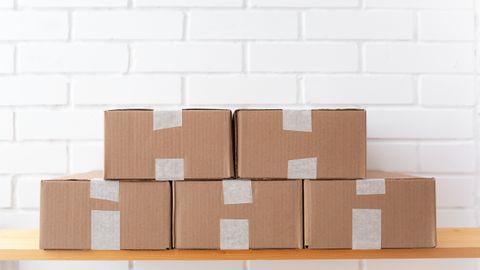
Most small stores ship from too many box sizes, or from one box that is too big for half the orders. Two or three sizes usually cover a range well. Pick them so your most common product sits in the smallest box with two or three turns of honeycomb paper around it and a thumb's width to spare.
Then save them in your store. The Shopify help page on packages and weights makes a point many sellers miss. Advertised box sizes may be inside dimensions, so measure the outside of your boxes. Carriers price on the outside.
Shopify also says most carriers charge by size and weight. That leads straight to the next step.
Step 2: why the box costs more than the paper
Parcel carriers such as UPS charge on a "dimensional weight", worked out from the box size, when a box is large for its weight. UPS explains its method on its dimensions and weight page. Multiply length x width x height in inches, then divide by a divisor. UPS gives 139 for its daily rates and 166 for retail rates, and rounds any fraction up to the next pound.
Picture a ceramic bowl that weighs 2 lb once packed. The box sizes are only an example.
| Box (inches) | Cubic inches | Divided by 139 | Billable weight |
|---|---|---|---|
| 12 x 10 x 8 | 960 | 6.9 | 7 lb |
| 10 x 8 x 6 | 480 | 3.5 | 4 lb |
The bowl did not change.
The box did, and the billable weight fell from 7 lb to 4 lb. Across a year of orders, that difference is usually much bigger than anything you could save by buying cheaper paper, which is why I would print this table and pin it above the packing table.
This is where honeycomb paper earns its place on a website store. It wraps tight around the product, so the product can go in the smaller box. A loose fill needs space to work, and that space is paid for on every parcel.
Other carriers and other countries use their own divisors and often centimetres. Check the page of your own carrier, not this table.
Step 3: put the paper's weight into your package
Shopify asks for accurate product and package weights, so customers are charged the right shipping. The paper is part of the package. Work it out once:
Paper weight in grams = flat metres used x flat width in metres x GSM
Say an order uses 1.2 m of flat paper from a 380 mm roll of 80 GSM. That is 1.2 x 0.38 x 80, or about 36 g. Add the empty box and any insert card, weigh the lot on a kitchen scale, and enter that as the package weight.
Measure the flat metres carefully. We quote every roll in flat metres for exactly this reason. Mark a metre on a flat piece, pull it the way your packer does, and count how much a typical order takes. Our post on honeycomb paper consumption has the full method if you want a monthly forecast too.
Step 4: write a pack recipe for each product
A pack recipe is five lines on a card. It saves you from training every new packer from memory, and it means the parcel a customer receives in December looks like the one they received in June.
- Product name and SKU.
- Box size, by its name in your store.
- Paper width and grade, for example 380 mm, 80 GSM.
- Number of turns, and where to add an extra layer (a handle, a lid, a corner).
- A photo of the packed box, before it is sealed.
For glossy or soft finishes, add a tissue layer between the product and the honeycomb. For heavier glass and ceramics, test a heavier grade. Our GSM guide explains how to pick between two grades with a simple test.
Step 5: set up the bench
Your volume decides the format.
I would not overbuy here, because paper stored for a year in a humid room is weaker paper.
| Your volume | Format that suits it | Why |
|---|---|---|
| A few orders a week | Pre-cut sheets, or a 10 m roll by hand | No dispenser, no storage problem |
| Daily orders, one packer | A 100 m or 250 m flat roll on a table-top dispenser | One-handed pull, steady tension, less waste |
| Several packers | One dispenser per packer, same width and grade | Everyone packs the same way |
| Flat, light items | Honeycomb padded mailers | No box at all for the right products |
Our pre-cut sheets are 390 x 500 mm. Our padded mailers come in six sizes, from 6 x 9 inch to 15 x 19 inch. The products page lists the rolls, sheets, mailers and the table-top dispenser.
A dispenser with a tension knob is worth having once you pack every day. It holds the roll steady, so the paper opens evenly and tears less at the start of each pull. The dispenser guide covers the options.
Step 6: publish a damage policy before you need one
On a marketplace, a damaged item goes through the marketplace's claim process. On your own store, it comes to your inbox, usually with an upset customer attached.
Write the policy now, while you are calm. If it were my store, it would say four things.
- Contact us within a few days of delivery, with photos of the item and the box.
- Keep the box and the packing until we reply, because the courier may ask for it.
- We will replace or refund, and tell you which within one working day.
- We may ask the courier to inspect the parcel.
The photos are not only for the claim. They tell you whether the paper failed, the box failed, or the box was simply too big. Keep them in one folder and look at them every month.
What honeycomb paper does well on a website order, and where it does not
It wraps quickly, it locks onto itself without tape, and it opens into a neat, papery look in the customer's hands. For a brand selling on its own site, that unboxing is part of the product. Our post on recycling claims explains what you can honestly say about the paper on your site.
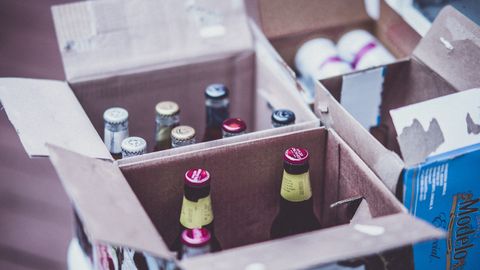
It does not fill a big empty box well, it does not stop liquids leaking, and it does not protect a sharp blade. For large gaps, pair it with a separate void fill. For bottles, seal the cap first.
I would rather you knew that before you build your packing around it.
We would rather lose a sample order than sell paper for a job it cannot do.
Where we fit
We make honeycomb paper rolls, sheets and mailers in Jaipur and sell them by the pallet and the container, mostly to distributors and to larger ecommerce brands. If your store packs a few hundred orders a month, a local distributor is the right place to buy, and many of them stock rolls like ours.
If you are bigger than that, or growing fast, send us your top five products and your box sizes through the contact page. I will suggest a width and a grade to test, and we will send a sample you can pack, drop and weigh on your own bench.
Questions buyers ask
Should I offer shipping insurance on fragile orders?
For expensive fragile items, I would. Insurance pays you back, but it does not repair the customer's evening when the vase arrives in pieces. Fix the packing first, and treat insurance as the backstop for the parcels the courier truly loses or crushes.
Can I get honeycomb paper in my brand colour?
Colour is the simple route. We make natural brown, white, black, blue, green, red and yellow, and many brands pair the wrap with a printed sticker or tissue. Brown, white and black are in our regular stock, and red, blue, yellow and green usually are. An exact brand shade is made to order with a minimum order of 8 pallets of one colour in one width, so check your volume reaches it before you design around it.
Is honeycomb paper heavy enough to change my shipping cost?
Rarely by itself. A metre or so of flat paper per order weighs tens of grams. What changes your cost is the box the paper lets you choose. Enter the paper weight in your package preset anyway, so your rates are honest.