Honeycomb paper for exporters: protecting goods in cartons on a long sea voyage
How exporters can use honeycomb paper inside export cartons: wrap per item, fill voids, keep it dry in the container, and test before the first shipment.
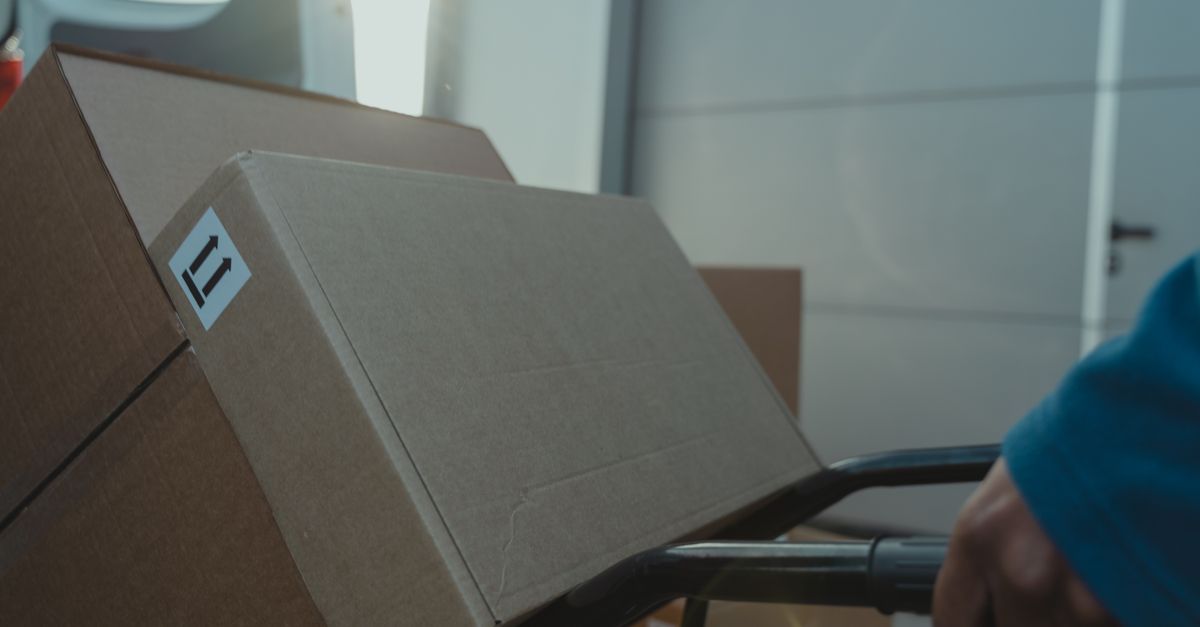
An export carton has a hard life. It is packed in Jaipur or Moradabad or Khurja, trucked to a port, lifted into a container, shipped for weeks, unloaded, trucked again, and often opened only in the buyer's warehouse, far from anyone who can fix a problem.
If one piece breaks, the buyer sees a broken piece. If a whole layer breaks, you may lose the buyer.
Honeycomb paper helps, but only as one part of the job. Use it to wrap each item inside the carton, fill every empty space so nothing moves, choose cartons strong enough for the stack, and keep the whole load dry from the packing room to the container door. Then test a few packed cartons before the first full shipment.
We ship honeycomb paper in containers from Mundra ourselves, so I know the problem from both sides. Our own rolls are wrapped off the line and our pallets are stretch-wrapped, for the same reason I will give you below.
What job does honeycomb paper do in an export carton?
It wraps and cushions each item. The open cells take up small knocks and stop items rubbing against each other or against the carton wall.
It does not do three other jobs:
- It does not fill large empty spaces. A wrapped item rattling in a half-empty carton will still break.
- It does not make a weak carton strong. If the carton crushes in the stack, the wrap cannot save what is inside.
- It does not keep out water. Paper is paper.
Plan for all four jobs, not just the first one.
How should you pack each carton?
Pack tight and pack dry. A good export carton has no movement inside when you shake it.
- Wrap each item separately. For glass or ceramics I would start testing at two turns of stretched honeycomb paper, and try more on heavier items.
- Separate items with dividers or extra wrap, so no two hard surfaces touch.
- Put a cushion layer at the bottom and the top of the carton.
- Fill the remaining voids with crumpled paper, honeycomb or void fill paper, until nothing moves.
- Close and tape the carton, and shake it. If you hear anything, open it again.
The international code for packing containers, the IMO/ILO/UNECE CTU Code (2014 edition), has a short line among its packing rules: "Do fill void spaces when necessary." That applies inside cartons as much as inside the container.
Our guide on what honeycomb paper is and how it protects explains why stretched paper cushions better than loose paper. If you export wood, brass or marble pieces, our article on packing handicrafts for export goes product by product.
Why is moisture the biggest risk on export routes?
Because a sealed container on a long voyage makes its own rain.
The CTU Code describes it plainly in Annex 3. Temperatures inside a container swing between day and night. Moisture comes out of the cargo and packaging during the warm hours, then condenses on the cold roof in the evening and drips back as "container sweat".
The same annex has a number every exporter of goods in cartons should know. It says ordinary cardboard that is not waterproof loses up to 75% of its stableness as humidity rises from 40% to 95%, and stacked cartons can collapse. That is the CTU Code's own figure, not mine.
Paper wrap behaves the same way. Damp honeycomb paper loses stiffness, so its cells fold flat sooner.
We deal with this on every container we load at Mundra. That is why we make and store our rolls in a moisture-controlled plant, check moisture on every lot, and wrap each roll as it comes off the line.
So the rule is simple. Pack dry, and keep it dry.
Moisture checklist for export packing
| Stage | What to do |
|---|---|
| Storing wrap and cartons | Keep them wrapped, off the floor, away from damp walls and open doors |
| Monsoon packing | Do not pack in an open yard on a wet day. Keep cartons indoors overnight before packing |
| Pallets | Use dry pallets. Wet timber puts water straight into the container |
| Pallet wrapping | Stretch-wrap pallets, or cap them, so loose cartons do not shift |
| Inside the container | Use desiccant bags on long or humid routes, as your forwarder advises |
| Loading | Load on a dry day where possible, and do not leave a loaded container open in rain |
The CTU Code also mentions that dry pallets and packing material still carry around 12% to 15% moisture, and that this alone will settle the air in a closed container at about 60% to 75% humidity. Its advice is to add drying measures like desiccants, in combination with plastic wrapping. I would take that seriously on any voyage of more than a couple of weeks.
Which cartons and wrap grades suit export?
Match the carton to the stack, and the wrap to the item.
I would start with the carton. Ask your box maker for double-wall board for heavy or fragile goods, and tell them the stack height in the container. A carton that is strong in a dry factory may not be strong at sea.
For the wrap, heavier grades suit heavier items. Our honeycomb paper runs from 50 to 120 GSM. As a rough guide, the lighter end suits small, light items, and the heavier end suits ceramics, stone and brass. Test both ends on your heaviest product before you decide.
Width matters too. A 500 mm roll covers a tall vase in fewer turns. A 250 mm roll is tidier for small bottles and jewellery boxes.
Does the destination change anything?
Yes, in two ways.
First, the buyer's rules. Importers in Europe, the UK and Australia increasingly ask about plastic in the inner packing, and some send their own packaging specification. Read it before you buy wrap, not after.
Second, the paperwork. If your buyer wants an FSC claim on the packaging, that claim must appear on your supplier's invoice with a certificate code, and then on your own invoice, which needs your own FSC certificate. Our article on honeycomb paper recycling and FSC claims covers what you can honestly say.
Wooden pallets and crates are a separate topic. Many countries require wood packaging to meet ISPM 15, the IPPC standard for wood packaging material in international trade (2018 version). Cartons and paper wrap are not wood packaging, but the pallet under them is.
How do you test before the first shipment?
I would never ship a first container without this. Pack five cartons exactly as you will for the real order. Then:
- Drop each one from about knee height onto a bottom corner, an edge and a face.
- Stack cartons the way they will sit in the container, with some weight on top, for a day.
- Leave one packed carton overnight in the dampest room you have, then drop it again.
- Open everything and look for cracks, chips, rub marks and crushed corners.
If the buyer asks for a formal test, ask which standard they want. Some buyers name a specific test procedure, and a packaging lab can run it for you.
Worked example: a ceramics exporter's first container
Say a ceramics exporter is sending a 40 ft container of planters and mugs to a UK importer, about 30 days door to door. The numbers are made up for the example.
- Mugs: one 250 mm wide sheet each, two turns, six to a carton with honeycomb between them.
- Planters: a 500 mm sheet, three turns, one or two to a double-wall carton with void fill around.
- Cartons kept indoors for two days before packing, as it is monsoon.
- Pallets stretch-wrapped, desiccants hung inside the container as the forwarder advised.
- Five test cartons dropped and stacked the week before, with one change made after the test: an extra layer at the carton bottom for planters.
None of these steps is expensive.
Skipping them is.
Where we fit
We make honeycomb paper in Jaipur in a moisture-controlled plant, and every lot is checked for GSM, roll weight, moisture and cut quality before packing. Our quality page lists the checks, and our export page shows how we ship it in containers.
I will admit one limit. We make the wrap, not your cartons, and the best wrap in the world cannot save a weak box. Please get the carton right as well.
If you export fragile goods, send us your main products, carton sizes and destinations through our contact page. We will suggest a width and grade and send samples for your test cartons.
Questions buyers ask
Does honeycomb paper absorb moisture in a container?
Yes, like any paper it takes up moisture from humid air, and it loses some stiffness when it does. That is why the packing has to start dry and stay protected. Dry paper, dry cartons and dry pallets, plus desiccants on long or humid routes, keep it working.
Do I need ISPM 15 treatment if I only ship cartons?
ISPM 15 covers raw wood packaging such as pallets, crates and dunnage, not corrugated cartons or paper. If your cartons sit on wooden pallets, the pallets need to comply where the destination country asks for it. Plywood and other processed wood are outside the standard.
Is honeycomb paper good enough for air freight?
For most fragile goods in a strong carton, yes. Air shipments are shorter and drier, but they get handled roughly at hubs, so wrap per item and fill the voids just as carefully. I would still run the drop test on your heaviest piece.
Will European buyers accept honeycomb paper instead of plastic bubble wrap?
Usually yes, and some prefer it, because paper is widely collected for recycling there. I would confirm with each buyer in writing, though. Some have their own packaging specifications, and a few want specific certificates or test reports with the shipment.