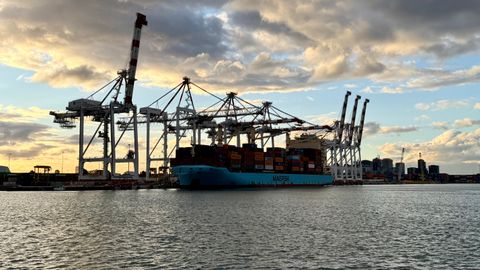
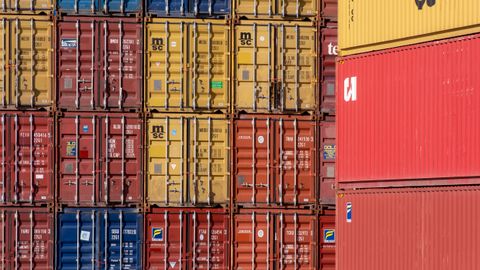
How many honeycomb paper rolls fit in a container?
Our real loading figures: 800 rolls in a 20 ft and 1,600 in a 40 ft for 380 mm x 250 m. How to plan pallets, mix items and check the container on arrival.
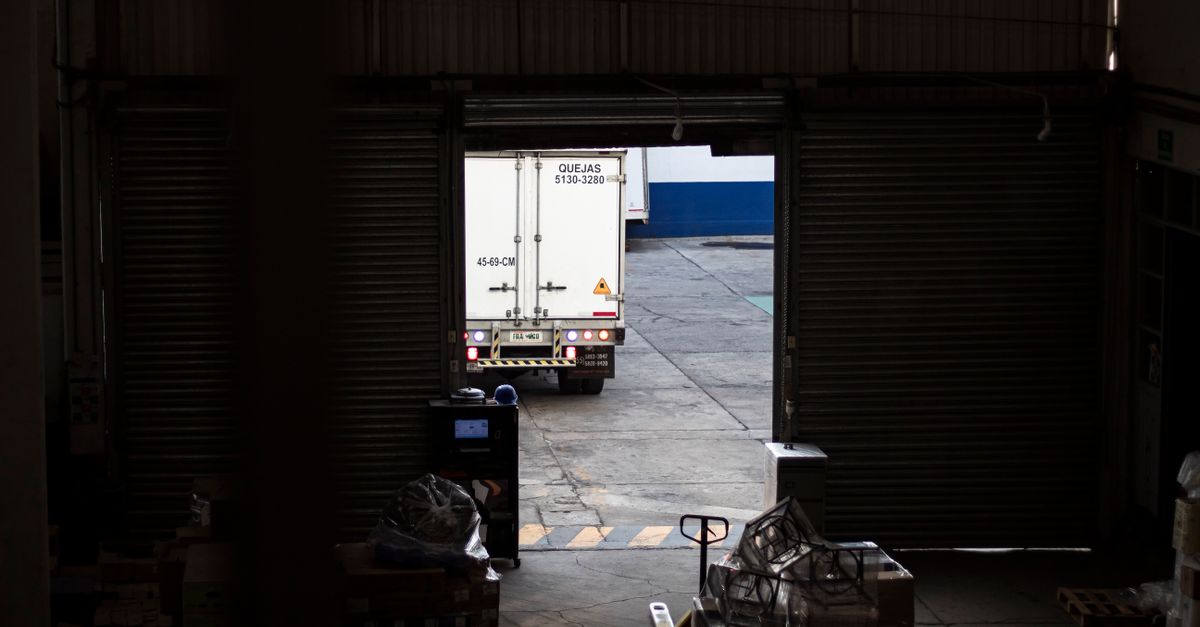
Our most exported honeycomb roll is 380 mm wide and 250 m long, flat. We pack 40 of these rolls on a pallet. A 20 ft container takes 20 pallets, i.e. 800 rolls. A 40 ft container takes 40 pallets, which is 1,600 rolls.
Those are real loading figures from our plant in Jaipur, not a calculation from a brochure.
Other widths and roll lengths change the count, so for any other item ask for a loading plan with the quote. We prepare one for every export order anyway.
The rest of this page explains why the count works this way, how to plan a container with several items, and what to check when it reaches your warehouse.
Why do we count honeycomb paper in pallets, not kilos?
Because honeycomb paper is light and bulky. A container of it runs out of space long before it reaches its weight limit.
Think of a truck of raw cotton going to a mandi. It looks completely full, and it is still nowhere near heavy. Honeycomb rolls behave the same way.
You can check this with simple arithmetic. A 380 mm x 250 m roll of 80 GSM paper carries 80 x 0.38 x 250 = 7,600 g of paper. That is about 7.6 kg, plus the core and the wrapping. So 1,600 rolls hold roughly 12 tonnes of paper. Ocean Network Express lists a maximum payload of 26,840 kg for its standard 40 ft dry container on its dry container specifications page, more than twice that.
For reference, this is how one shipping line lists its standard dry containers. Individual boxes vary a little, so treat these as typical.
| Ocean Network Express spec | 20 ft dry | 40 ft dry |
|---|---|---|
| Inside length | 5,898 mm | 12,032 mm |
| Inside width | 2,350 mm | 2,350 mm |
| Inside height | 2,390 mm | 2,390 mm |
| Capacity | 33.1 m³ | 67.6 m³ |
| Maximum payload | 28,330 kg | 26,840 kg |
This is why your freight cost per roll depends almost fully on how many rolls fit, and very little on the GSM you pick.
Heavier paper adds weight. It does not add containers.
The loading figures
These numbers are for our standard 380 mm x 250 m flat roll.
| 20 ft container | 40 ft container | |
|---|---|---|
| Pallets | 20 | 40 |
| Rolls per pallet | 40 | 40 |
| Rolls | 800 | 1,600 |
| Flat paper | 200 km | 400 km |
| Wrap after pulling (our cut opens about 1.6x) | about 320 km | about 640 km |
| Paper weight at 80 GSM (example) | about 6 tonnes | about 12 tonnes |
The last row is an example at one grade. At 120 GSM the paper weighs 1.5 times as much, and the roll count stays the same.
Flat metres matter more than rolls when you compare suppliers. A container of 1,600 short rolls is not the same as a container of 1,600 rolls of 250 m flat. Our guide on writing a honeycomb paper purchase order explains how to check the flat length by weighing one roll.
How are the pallets loaded?
Our standard export pallet carries 40 rolls of 380 mm x 250 m and stands about 1,200 mm high. That height lets two pallets stack on top of each other inside the container. So a 20 ft container takes 10 floor positions of two pallets, and a 40 ft container takes 20.
Some buyers take a taller pallet of 96 rolls instead, loaded single-stacked, so there are fewer pallets to handle at each end. Others ask for something else again. We pack to the buyer's specification: a different number of rolls per pallet, a lower pallet for your racking, cartons instead of open pallets, or your own labels. Each change moves the count, so ask for a pallet plan with the quote.
These are the packings most common in the trade:
| Packing (380 to 500 mm x 250 m rolls) | Rolls per pallet | In the container | Who uses it |
|---|---|---|---|
| Our standard pallet, about 1,200 mm high | 40 | Double-stacked | Most of our export buyers |
| Tall pallet | 96 | Single-stacked | Buyers who want fewer pallets to handle |
| Wholesale pallet, 500 mm rolls | 48 to 50 | Depends on height | Common in UK and Australian wholesale listings |
| Half pallet | 20 to 25 | Mixed with other items | Resellers selling smaller lots |
And the pallet standard usually follows your market:
| Pallet standard | Footprint | Where it is the norm | Single-tier pallets per 20 ft / 40 ft |
|---|---|---|---|
| Euro pallet (EPAL 1) | 1,200 x 800 mm | Continental Europe | 10 to 11 / 20 to 24 |
| Industrial pallet (ISO, EPAL 3) | 1,200 x 1,000 mm | UK, Europe, Asia, Middle East | Ask for a plan |
| North American pallet (GMA) | 48 x 40 in (1,219 x 1,016 mm) | USA and Canada | 9 to 10 / 20 to 21 |
| Australian pallet | 1,165 x 1,165 mm | Australia and New Zealand | Fits containers less neatly. Ask for a plan |
Container figures for the Euro and North American pallets are from Teuvia's guide to pallets per container, checked October 2026. Exact counts depend on the loading pattern.
What changes the count for other sizes?
Roll diameter and roll width. A pallet has a fixed footprint and the container has a fixed height. So the count per pallet depends on how much space each roll takes on the floor of the pallet, and how many layers fit before the stack gets too tall.
Heavier GSM paper makes a fatter roll for the same flat length. A 100 m roll is slimmer than a 250 m roll. A 500 mm roll stands taller than a 380 mm one. Each of these moves the count up or down.
I will be honest here. I cannot give you a fixed table for every width and grade on this page, because the honest answer comes from a pallet plan for your exact mix. A wrong guess here is expensive, so we prefer to send a loading plan with each quote.
How do I plan a container with several items?
Plan at least 4 pallets of each item. Then fill the rest with your fastest-selling item.
That rule gives you a simple ceiling.
- A 20 ft container carries 20 pallets, so up to 5 items at 4 pallets each.
- A 40 ft container carries 40 pallets, so up to 10 items at 4 pallets each.
Fewer items is better. Every extra item means another pallet label, another line on the packing list and another location in your warehouse.
I would keep a first container to three or four items at most.
Here is a worked example with assumed numbers. Say a distributor in Europe wants a 40 ft container for its first full order.
| Item (example) | Pallets |
|---|---|
| 380 mm x 250 m, natural kraft, 80 GSM | 24 |
| 500 mm x 250 m, natural kraft, 80 GSM | 8 |
| 250 mm x 250 m, natural kraft, 80 GSM | 4 |
| Pre-cut sheets 390 x 500 mm | 4 |
| Total | 40 |
The 380 mm line is the workhorse, so it takes most of the space. The other three items are there to test demand. If one of them sells fast, it gets more pallets in the next container. The pallet counts for the 500 mm, 250 mm and sheet items would come from the loading plan, because those items do not pack 40 to a pallet like the 380 mm roll.
Pallets or floor loading?
We ship on pallets. We wrap each roll as it comes off the line, stack the rolls on pallets, and stretch-wrap every pallet.
Floor loading (rolls stacked loose on the container floor) can squeeze in more paper. I still do not recommend it for honeycomb paper. Loose rolls get crushed at the edges, sit directly on the container floor and take a long time to unload by hand. Your warehouse team will not thank you.
If your country checks wooden pallets, they must meet ISPM 15, the international standard for wood packaging. We supply ISPM 15 heat-treated and marked pallets. Tell us your destination in your enquiry and we will plan the pallet type before production, not after.
What should I check before the container leaves India?
Ask for these before the doors are closed.
- The loading plan, pallet by pallet, with item codes.
- The verified gross mass (VGM) of the packed container. Since 1 July 2016, SOLAS rules from the International Maritime Organization say a container without a verified gross mass on the shipping document shall not be loaded.
- Photos of the loaded container, from the back to the doors, plus the closed doors with the seal.
- The container number and seal number, which must match the bill of lading.
- The packing list, with the pallet count for each item.
- Container desiccants, if your container will cross hot and humid routes or wait at a port in the monsoon. Ask your forwarder which type suits a closed container of paper.
The sixth point matters more than most buyers expect. The Transport Information Service of the German Insurance Association (GDV) explains that condensation forms when air inside a container cools below its dew point on cold walls, and that the cargo, its packaging and the wooden floor are the largest sources of that water. Paper takes it up. Load dry, and keep it dry. Our page on storing honeycomb paper and controlling humidity covers what happens once it is in your warehouse.
What should I check when the container arrives?
Check the seal before anyone cuts it.
This takes two minutes, and it decides whether any later claim is easy or impossible.
- Compare the seal number with the bill of lading. Photograph it.
- Open the doors and photograph the load before you touch it.
- Count the pallets against the packing list.
- Look for wet patches on the roof, walls and top pallets.
- Weigh one roll from two different pallets. The weight tells you the flat length, so you know the paper is all there.
- Pull a few metres from one roll on your dispenser and check that it opens evenly across the full width.
If anything looks wrong, note it on the delivery paperwork and tell your supplier with photos the same day. A claim with photos from the door is easy to settle. A claim from three weeks later is not.
Plan your next order before this one runs out
A container is a big step for a first order. Most buyers start with a 20 ft and move to a 40 ft once they know their monthly use. Our guide to working out honeycomb paper consumption will tell you how many rolls you really need per month.
If you want a loading plan for your own mix of widths and grades, send us the items and your destination port through our contact page. We will send the plan with the quote, so you can see exactly what you are buying before you book the container.
Questions buyers ask
Does a 40 ft high cube container take more honeycomb rolls?
It has more height, so it can take more in theory, but only if the pallets can be built taller without crushing the bottom rolls. I would not plan on it from a table. Ask your supplier for a loading plan for the exact container type before you book it.
Can honeycomb rolls be floor-loaded without pallets to fit more?
It is possible, but I would not do it for paper. Loose rolls get crushed at the edges, pick up moisture from the container floor and take hours to unload by hand. Pallets cost a little space and save a lot of trouble at both ends.
Can I order less than a 20 ft container?
You can ship part loads by consolidation (LCL), but for honeycomb paper it rarely makes sense. You pay for space, the cargo is handled more times, and the cost per roll goes up. For a first trial, a 20 ft container is the sensible minimum with us.
How many pallets do I need for a mixed order?
Plan at least 4 pallets of each item. So a 20 ft container can carry up to 5 different items and a 40 ft up to 10. Fewer items with more pallets each is easier to load, count and store.