How to wrap glass bottles with honeycomb paper for courier
A step-by-step way to wrap glass bottles for shipping with honeycomb paper: roll width by bottle height, the neck collar, turns, box fit and a drop test.
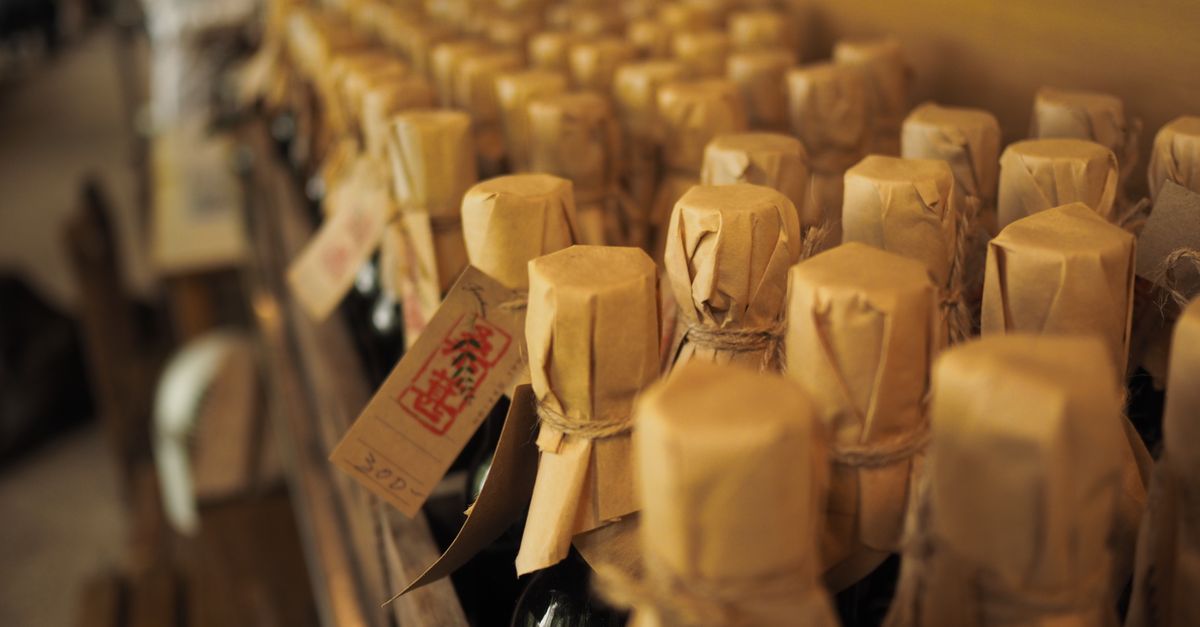
Glass bottles rarely break in the middle. They break at the base edge when a parcel lands upright, at the shoulder when it takes a side knock, and at the neck when the bottle swings like a lever. And they break when they hit each other.
So the job of the wrap is simple. Keep every bottle away from every other bottle and from the box wall, with a cushion that stays in place. With honeycomb paper, that means a pad under the base, three or so turns around the body, a collar at the neck, both ends folded in, and a box that fits the wrapped bottle snugly.
We make honeycomb paper in Jaipur, and glass bottles are one of the jobs it does best.
This is the method I would hand to a new packer on the first day.
Where does a bottle break, and why?
Think of a bottle as three parts.
- The base edge. It is thick glass, but a hard landing puts all the force on a thin ring. A pad under the base spreads that force.
- The shoulder. This is where the bottle is widest, so it touches the box wall first on a side knock.
- The neck. It is narrow and sticks out. If the body is held and the neck is not, every jolt bends the neck against the shoulder.
Most wraps protect the body well and the two ends badly.
That is where the extra paper should go.
Which roll width do I need for my bottles?
Pick a width that covers the bottle's height with room to fold over both ends. A good rule is bottle height plus about 10 cm at each end.
Remember that honeycomb paper gets a little narrower as it opens. Measure a pulled sheet, not the label on the roll.
| Bottle (typical) | Height range | Roll width to try |
|---|---|---|
| Miniatures, 5 to 20 cl | Up to about 15 cm | 250 mm, or 200 mm for very small ones |
| Beer, kombucha, 33 to 50 cl | About 15 to 25 cm | 380 to 400 mm |
| Spirits and wine, 70 to 75 cl | About 25 to 35 cm | 490 to 500 mm |
| Tall or large bottles, 1 litre and up | Over 35 cm | 500 mm plus a separate pad for the cap end |
These are starting points from simple geometry, not a standard. Your bottle's shape, especially a wide shoulder or a long neck, decides the rest. We make standard widths of 100, 200, 250, 380, 390, 400, 490 and 500 mm, and 12, 15 and 20 inch rolls for the US.
Step by step: wrapping one bottle
- Seal the cap. Tape it, or use a shrink band, if there is any chance it can work loose. Put the bottle in a sealed bag if it holds liquid.
- Pull a sheet. For a 70 cl bottle, pull enough for three full turns plus an overlap. Let the dispenser open the cells properly. Paper pulled half-open gives half the cushion.
- Make a neck collar. Take a 100 or 200 mm strip, or fold a piece of your main sheet, and wind it around the neck until it is as wide as the shoulder. Now the bottle is close to a cylinder.
- Roll the bottle. Lay it at one end of the sheet and roll it up, keeping the paper square to the bottle so the turns stay even.
- Fold the ends. Push the extra paper down over the base and over the cap, like closing the ends of a cracker. Tuck the last edge into the cells so it holds.
- Add a base pad. Fold a short piece into a flat pad and put it at the bottom of the box.
The neck collar is the easiest step to skip, and I would not skip it.
It takes ten seconds. Without it, the body is padded and the neck floats in a cone of air. With it, the whole bottle is held.
How many layers, and which GSM?
For a full 70 to 75 cl bottle, I would start testing at three turns of 80 to 100 GSM paper. For miniatures, two turns of a lighter grade is usually enough. For heavy bottles with thick glass, test 100 GSM and above. Our guide on how many layers a product needs explains how to test layers one change at a time.
Do not go too light. A full bottle is heavy for its size, and light paper cells can fold flat under it. Once the cells are flat, you have a paper sleeve and very little cushion.
How should the box fit?
Snug. The wrapped bottle should go into the box with a gentle push, and it should not move at all when you shake the closed parcel.
A box that is too big lets the bottle build up speed before it hits the wall. A box that is too tight squeezes the wrap flat before the parcel even leaves your bench.
For two or more bottles, use a box with dividers, or wrap each bottle and pack them so the wraps touch, never the glass. Fill the top gap with a twist of paper, so the bottles cannot jump when the box is turned over.
Test it before you trust it
Pack one bottle exactly as your packer will. Then drop the parcel from about waist height onto a hard floor: flat on the base, on one corner, on a long edge and on a side. Open it and look carefully at the base edge and the neck.
I like this test because it costs nothing except one bottle, and I would rather lose that bottle on my own floor than in a customer's hallway.
If the bottle survives, pack ten more the same way and send a few to friends or colleagues in other cities.
Real courier networks do things a floor test cannot.
For a formal test, labs use procedures such as ISTA 3A, the International Safe Transit Association's simulation for parcel shipments of 70 kg or less. You do not need a lab to start. You may need one if a marketplace or a large customer asks for proof.
We do our own drop and strength tests on samples in Jaipur, and we check every lot for GSM, moisture and cut quality. Those tests tell us about our paper. Your test tells you about your bottle in your box, which is the thing that actually matters to your customer.
Where honeycomb paper is not enough
We make the paper, so we should also tell you what it cannot do.
- Leaks. Paper soaks up liquid and loses strength when wet. Bag the bottle if it holds liquid, and use a leak-proof seal on the cap.
- Heavy multi-bottle cases. For six or twelve bottles, use a carton with dividers or moulded inserts. Honeycomb then wraps each bottle as a sleeve, but the dividers carry the load.
- Bottles with an odd shape and a long, thin neck. Test these hard, and consider a fitted insert.
Worked example: one 70 cl bottle per order
Say a small spirits brand ships one 70 cl bottle in most orders. The plan I would test first is a 500 mm roll on a dispenser, three turns of 90 GSM, a collar from a 200 mm roll and both ends folded in. The wrapped bottle goes into a shipper box that fits it snugly, on a folded base pad.
Then the drop test, then ten real parcels to real addresses. Only after that would I order paper by the pallet.
We would rather sell you the right paper slowly than the wrong paper quickly.
For bottles with their own rules, we have separate guides for shipping wine and packing perfume. Our dispenser guide explains how to make every pull open the same way.
Send us your bottle sizes through the contact page, and we will suggest two grades and a width for you to test.
Questions buyers ask
Can I send a glass bottle in a padded mailer?
Not a full bottle of liquid. A mailer bends, and a bottle needs a box that holds its shape. Small empty vials in their own carton are a different case, and a honeycomb mailer can work for those.
How many turns of honeycomb paper does a bottle need?
I start at three turns around the body for a full 70 to 75 cl bottle, plus folded ends and a neck collar. Then I drop-test the pack. If it fails, I add a turn or move to a heavier paper, never both at once, so I know which change worked.
Do couriers accept glass bottles?
Most accept glass, but many limit what they pay out on breakage, and liquids such as alcohol or perfume have their own rules. Read your courier's prohibited and restricted items page before you set up a product, not after the first claim.
Should bottles go upright or on their side in the box?
Upright is easier to pack and keeps the cap up if a seal weeps. A well-wrapped bottle survives either way. What matters more is that it cannot move.