A plastic-free unboxing your customers will want to share
Plan a plastic-free unboxing around honeycomb paper: audit every part of the parcel, find hidden plastic, set the reveal order and keep the claim honest.
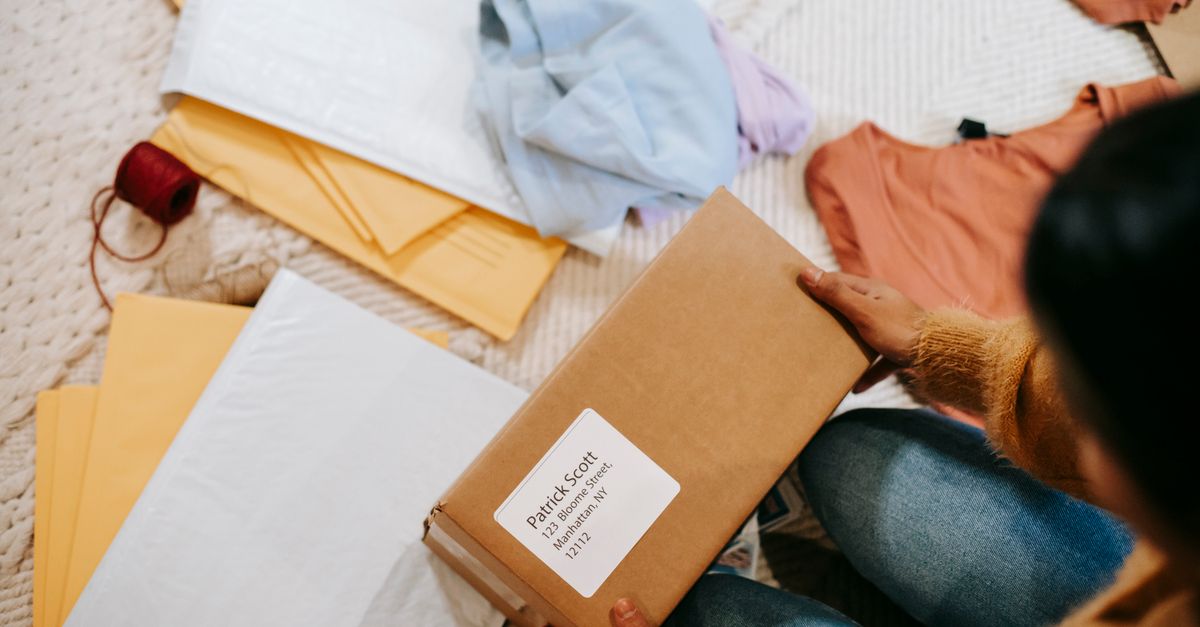
A plastic-free unboxing starts with a list. The design comes after. Write down every part of the parcel, find the plastic in each one, and swap it for paper where paper does the job. Honeycomb paper replaces bubble wrap as the cushion, and gives the opening moment a clean paper look.
Then make the claim fit the parcel exactly. Customers share an unboxing that surprises them. They also share one that says "plastic-free" and then drops a plastic pouch on the table.
We make honeycomb paper in Jaipur, so I clearly want you to use it. But the wrap is usually the easy part. The plastic that spoils a plastic-free parcel hides in the small things.
What counts as one parcel?
Everything the customer finds when they open it. That includes parts you never think of as packaging.
Take a typical ecommerce order and list it, layer by layer:
- The outer box or mailer.
- The tape that closes it.
- The shipping label, and any return label.
- The invoice or packing list, and the pouch it travels in.
- The protective wrap around the product.
- Void fill in the empty space.
- Sticker seals, ribbons and thank-you cards.
- The product's own packaging, such as a carton, a bag or shrink film.
Brands usually think of items 1, 5 and 6 first.
The plastic that is left often sits in 2, 3, 4, 7 and 8.
Where is the hidden plastic?
| Component | The common plastic version | Paper alternative | What to check |
|---|---|---|---|
| Protective wrap | Bubble wrap, foam sheet | Honeycomb paper wrap | Written confirmation of no coating or film |
| Void fill | Air pillows, foam peanuts | Void fill paper, crumpled honeycomb | Enough fill so nothing moves |
| Tape | Plastic packing tape | Paper tape | Adhesive and any reinforcement, in writing |
| Shipping label | Film-faced label | Paper-faced label | Face material, from the label supplier |
| Document pouch | Plastic "documents enclosed" wallet | Paper envelope, or the invoice inside the box | Courier rules for documents on the outside |
| Sticker seal | Glossy film sticker | Uncoated paper sticker | Face material and any lamination |
| Product's own pack | Poly bag, shrink film, plastic window | Paper bag, carton without a window | Ask the product supplier |
| Thank-you card | Laminated card | Uncoated card | Lamination adds a plastic layer |
Item 8 is the hard one. If the product arrives in a poly bag from its maker, your outer packaging can be plastic-free while the parcel is not. That is fine, as long as your words say so.
How does honeycomb paper fit in?
Honeycomb paper does two jobs in a plastic-free parcel. It cushions, which is the job bubble wrap used to do. And it is the first thing the customer sees under the lid.
A few things make it work better for unboxing:
- Wrap neatly and tuck the end under, so the customer sees cells, not torn edges.
- Put the neatest side up. That is the side in the photo.
- Use enough turns that the product is safe, and no more. Our guide to honeycomb paper consumption shows how to measure what each order really uses.
- Choose the colour on purpose. Natural kraft says "paper" at a glance. White, black or a colour can match the brand. Our guide to choosing a wrap colour for your brand helps there.
Honeycomb grips itself, so you usually need no tape on the wrap at all. That is one less sticky plastic strip for the customer to peel off.
I will admit one trade-off. Plastic shrugs off rain and paper does not. A paper parcel left on a wet doorstep, or packed in a damp room, loses some of its strength, and we tell every buyer to store our rolls dry for the same reason. If your parcels often wait outside in the rain, I would test a few in real conditions before you remove every bit of plastic.
Plan the reveal
An unboxing is a sequence. Decide what the customer sees at each step, in order.
- The outer box. Clean, closed with paper tape, with a paper label.
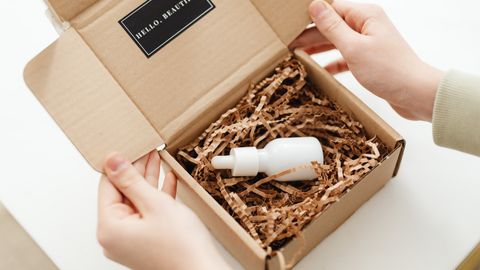
- The lid opens. A tidy layer of honeycomb, or a card sitting on top of it.
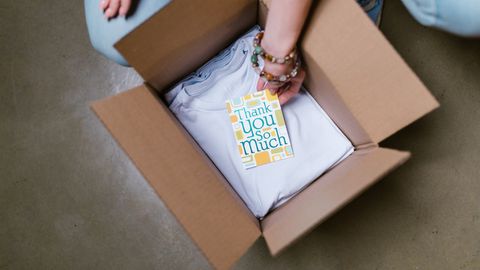
- The card. One line on what the packaging is made of and how to dispose of it.
- The wrap comes off by hand, with no knife needed.
- The product.
- At the end, everything goes into one paper bin.
Step 6 is the one people remember. If the customer finishes with a pile of paper and nothing to sort, the plastic-free promise feels real. If they find a plastic pouch at the bottom, it feels like a slogan.
I would also think about what customers photograph, because that is the part of the parcel that travels further than the parcel itself. People share what is neat, surprising or kind. A short handwritten line on the card does more for sharing than an expensive printed box.
Keep the claim honest
The easiest way to spoil a plastic-free unboxing is to claim more than you checked.
Our post on what you can honestly say about recycling honeycomb paper covers the rules in India and the EU in detail. Two practical points matter most here.
First, say which part you mean. "Plastic-free wrap and void fill" is easier to stand behind than "100% plastic-free packaging", unless you have checked every item in the table above.
Second, you own the claim even if a supplier gave it to you. In the UK, the Competition and Markets Authority's guidance Making green claims: getting it right across the supply chain (published 22 January 2026) says a business may be treated as repeating an environmental claim when it stocks a product. So collect written statements from each supplier, including us, and keep them on file.
We will put in writing what our honeycomb paper is made of. I would ask the same of your tape, label and mailer suppliers.
A simple audit you can do this week
Take one finished parcel from your packing bench, exactly as it would leave.
- Open it the way a customer would, and lay every part on a table.
- Sort them into two piles: paper, and anything else.
- For every item in the second pile, write down who supplies it and what the paper alternative would be.
- For every item in the paper pile, ask whether you have it in writing.
Expect a surprise or two. Fix those first, then decide what you can claim.
If honeycomb paper is on your list, send us your product and box size. We will send samples in the colour you like, and a written note of what the paper is made of. You can reach us on the contact page, and the quality page shows what we check on every lot.
Questions buyers ask
Is honeycomb paper plastic-free?
A plain honeycomb wrap is kraft paper with cuts in it, with no glue or plastic film needed to form the cells. Ask your supplier to confirm in writing that the grade you buy has no coating or plastic layer, and keep that note on file.
Is paper tape plastic-free?
It depends on the tape. Paper tapes differ in their adhesive and in whether they carry any reinforcement. Ask your tape supplier for a written materials statement before you include tape in a plastic-free claim.
Can I call my packaging plastic-free if the product has plastic?
Only if the claim clearly says which part you mean, such as "plastic-free outer packaging". If the product itself or its own pack contains plastic, a broad "plastic-free" line on the box would mislead.
Does a plastic-free unboxing cost more?
Some parts can cost more, such as paper tape or paper labels, and some can cost less or the same. Compare cost per order, not price per roll, because paper used carefully can match or beat what you use today.