Choosing the right box size when you wrap with honeycomb paper
Measure the wrapped product, not the bare one. How to size boxes for honeycomb paper, cut volumetric weight and prepare for the EU 50% empty space rule.
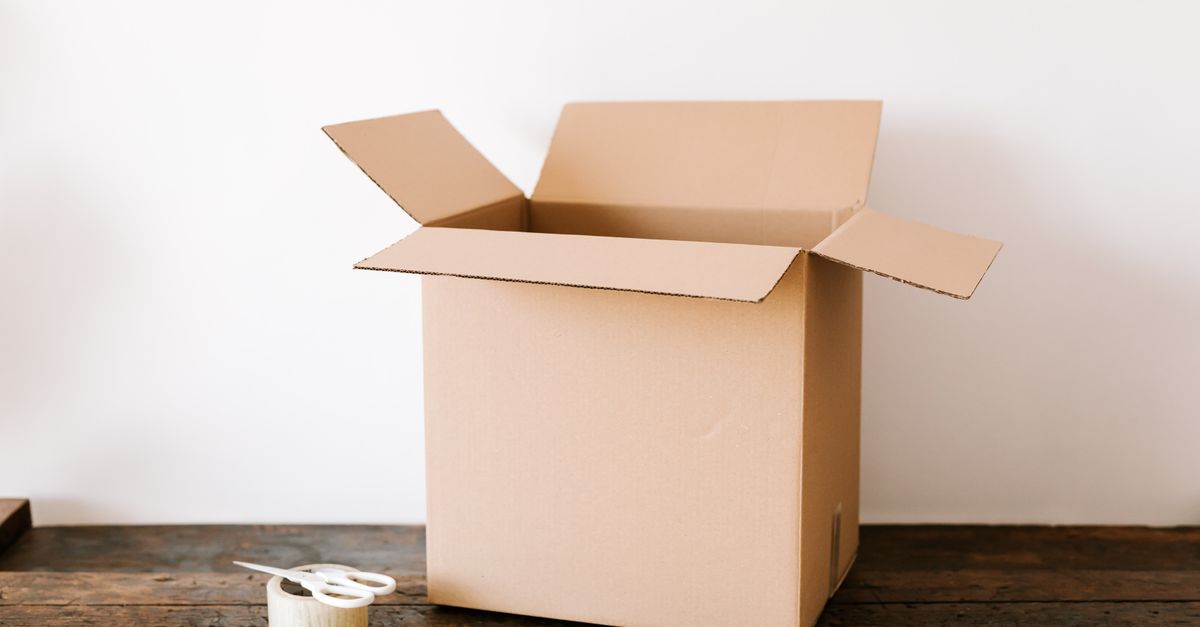
Most packing tables choose the box first and the wrap second. It should be the other way round.
Wrap the product in your standard number of turns of honeycomb paper, measure the wrapped product at its widest points, and choose the smallest box it fits into with light hand pressure. That box should hold the product still with little or no void fill. A box that is too big costs you fill, movement and volumetric weight. A box that is too tight crushes the cells that do the cushioning. From 2030 at the earliest, EU parcels will also have to meet a 50% maximum empty space ratio, and wrap counts as empty space in it.
We make honeycomb paper, not boxes. But in my view, when a product breaks inside good wrap, the box is often the real problem. So this is worth getting right before you change anything else.
Why measure after wrapping?
Because the wrap has thickness, and that thickness changes from table to table.
Three things decide it:
- The paper grade. We make honeycomb paper from 50 to 120 GSM, and a heavier paper, such as 100 or 120 GSM, makes stiffer cells than a 50 or 60 GSM paper.
- The number of turns. Two turns and five turns give very different sizes, and our guide on how many layers a product needs helps you set that number first.
- How hard the packer pulls. A paper that is pulled tight around the product sits thinner than one wrapped loosely.
So do not take the size from a product catalogue and add a guess. Wrap three units the way your packers actually do it, measure each one with a steel ruler, and take the largest figure for length, width and height.
Then write that wrapped size into your packing instructions, next to the box code. When an experienced packer leaves the company, the measurement stays behind.
I would also photograph one correctly packed box for every product group. A photograph explains a packing standard better than a paragraph.
How much space should you leave?
Enough for the wrapped product to go in without force, and no more than your fill can hold firmly.
I am not going to give you one figure in centimetres, because it depends on the product, the wrap and the route. Instead, use three checks on a sample box:
- The slide check. The wrapped product should go in with light hand pressure. If you have to push hard, the box is too small.
- The shake check. Close the flaps and shake. If the product moves, either add fill or try the next size down.
- The flap check. The flaps should close flat. Bulging means too tight, sagging means empty space at the top.
A box that passes all three is close to right for that product. Our guide on using honeycomb wrap and void fill together explains what to do with the space that remains.
How does box size change your shipping cost?
Couriers often charge on volume as well as weight. If the box is large and light, you pay for the space.
DHL Express, for example, works out volumetric weight as length x width x height in centimetres, divided by 5,000, and charges on whichever is higher, actual or volumetric weight (DHL Express FAQ, checked October 2026). Other couriers and services use their own divisors, so check your own contract.
A worked example, with round numbers and not from a real shipment:
| Box A | Box B | |
|---|---|---|
| Inside size | 30 x 25 x 20 cm | 25 x 20 x 15 cm |
| Volume | 15,000 cubic cm | 7,500 cubic cm |
| Volumetric weight (divide by 5,000) | 3.0 kg | 1.5 kg |
| Actual weight of the packed parcel | 1.2 kg | 1.1 kg |
| Weight the courier charges | 3.0 kg | 1.5 kg |
Same product, same wrap. Moving to the smaller box halves the charged weight in this example, with no change to the protection. Over 300 parcels a day, that is 450 kg of charged weight saved every single day.
This is why I always say: look at the box before you look at the price of wrap.
What will the EU 50% empty space rule mean?
From 1 January 2030 at the earliest, whoever fills an e-commerce box in the EU will have to keep its empty space ratio at 50% or less. That is Article 24 of the EU Packaging and Packaging Waste Regulation (Regulation (EU) 2025/40, Official Journal, 22 January 2025).
Two details matter for wrap users:
- Empty space is the volume of the outer box minus the volume of the sales packaging inside it.
- Space taken by filling materials, which the Regulation lists as including paper cuttings, air cushions and bubble wrap, counts as empty space.
So honeycomb wrap gets no special credit. A rough example, for illustration only: a 10 litre box holding a product in a 4 litre retail carton has 6 litres of empty space, a ratio of 60%, wrap or no wrap. The same product in a 7 litre box has 3 litres of empty space, about 43%.
The exact calculation method is still to come. The Commission says it will adopt it before 12 February 2028. Our guide to PPWR and honeycomb paper has the dates and the other obligations.
How many box sizes do you need?
Fewer than you think, if you group products by their wrapped size rather than by category.
A simple method:
- Take your top 20 products by orders.
- Wrap each one in your standard way and write down the wrapped size.
- Sort them by volume and look for natural groups.
- Pick one box per group that passes the three checks for every product in it.
- Check the leftovers. If two or three products need a lot of fill in every box, they may justify one more size.
| Example group | Example products | What to watch |
|---|---|---|
| Small | Jewellery boxes, small jars | Do not let a tiny item float in a big box |
| Medium | Mugs, candles, bottles | Handles and necks need extra turns, so measure them wrapped |
| Large | Vases, lamp bases, gift sets | Weight rises fast, check the box strength too |
| Flat | Frames, plates, mirrors | Measure thickness after wrapping, edges need care |
These groups are only an example. Your own list will look different, and that is the point of measuring.
What goes wrong when the box is too tight?
Honeycomb paper protects by letting its cells bend under a knock. If the box already squeezes them flat, there is nothing left to bend.
A tight box also bulges. A bulging box does not stack well in a courier van, and any weight on top presses straight into the product. Corners and handles take the load first.
I would rather see a box one size up with a little paper fill than a perfect-looking parcel that has no cushion left in it. Our guide on how honeycomb paper protects explains why the cells need room to work.
A quick box-fit checklist
| Check | Pass |
|---|---|
| Wrapped size measured on 3 units, not taken from a catalogue | Yes |
| Wrapped product slides in with light pressure | Yes |
| Nothing moves when the closed box is shaken | Yes |
| Flaps close flat, no bulge, no sag | Yes |
| Volumetric weight worked out for your main courier | Yes |
| Wrapped size written next to the box code in the packing instructions | Yes |
Next step
If you are re-sizing your boxes, do it together with the wrap, not separately.
Send us your top products, their sizes and weights, and the boxes you use today, with a product list for a box and wrap review. For each product group, we will recommend a roll width and paper weight. We can also send sample rolls in two grades, so your team can measure the wrapped sizes themselves before you order a single new box.
Questions buyers ask
Does honeycomb paper need a bigger box than bubble wrap?
It depends on the grade, the number of turns and the bubble size you compare it with. Wrap the same product both ways and measure with a ruler. That two-minute test beats any general rule, including mine.
How many box sizes should a small online shop stock?
As few as cover your best sellers well. Group products by wrapped size and start with three or four boxes. Add a size only when one product group keeps needing a lot of fill.
Is a snug box safe for glass?
Snug is good, crushed is not. The wrap has to keep some spring at the walls. If you need to push hard to close the flaps, go one size up or use fewer turns of a heavier grade.