Honeycomb paper for movers and packers: crockery, glassware and household goods
How removal firms can use honeycomb paper on household moves: wrapping plates, glasses and decor, crew kits, storage moves, and where bubble wrap fits.
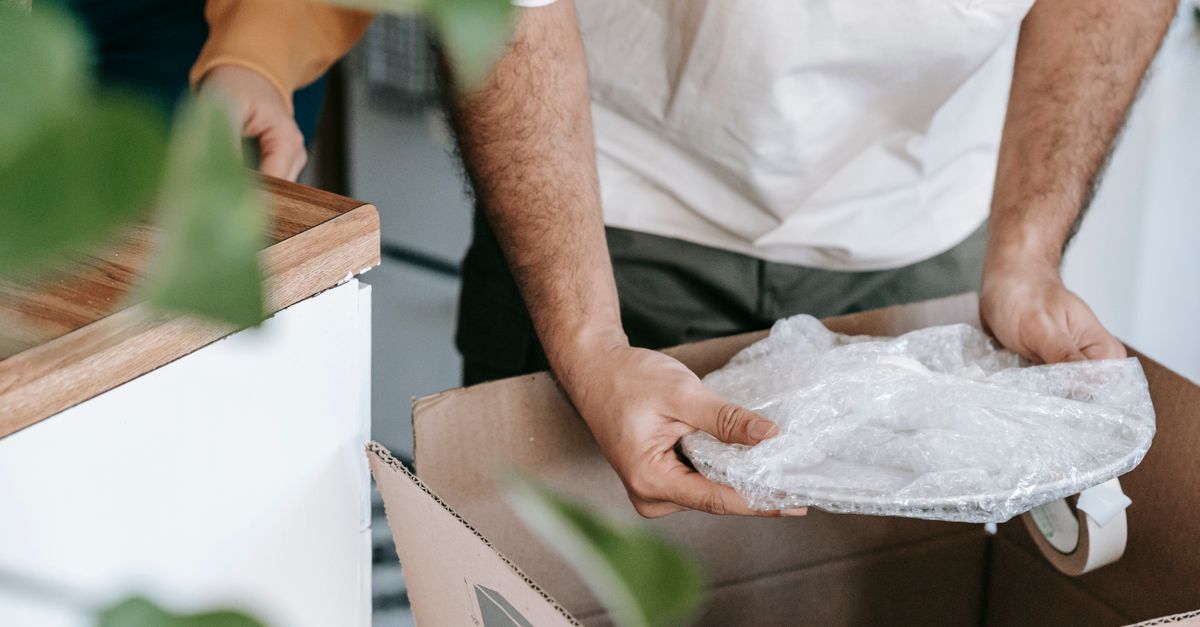
A household move is the hardest packing job there is. Nothing is the same shape twice, the crew packs in someone else's kitchen, and the owner is standing right there, watching their wedding crockery go into a box.
Honeycomb paper suits this work better than most movers expect.
The short answer: use honeycomb paper for crockery, glassware, ornaments, lamps and framed items, wrapping each piece separately with the paper stretched so its cells open. Stand plates on edge, fill glasses before wrapping, cushion the top and bottom of every carton, and leave no gaps. Keep blankets for furniture, and a small amount of bubble wrap or foam for the very delicate pieces.
We make honeycomb paper in Jaipur. We do not run a moving company, so I will stick to what the paper can and cannot do, and the packing basics that apply whatever paper you use.
Why do movers use honeycomb paper at all?
Three reasons, and the customer cares about two of them.
- It cushions. Plain packing paper is good for wrapping but has little spring in it. Honeycomb paper opens into cells when stretched, so it gives more cushioning per layer.
- It is clean and easy to recycle. No ink on the plates, and the customer can put the used paper out with paper recycling where that is collected. I think most households would rather unpack that than a pile of plastic.
- It packs small in the van. The rolls are wound flat and only open as you pull, so one roll goes a long way.
Our 250 m roll, for example, is measured flat and opens to about 400 m with our cut. For a crew, a shorter roll is often more practical. We also make 100 m and 10 m rolls, and pre-cut sheets of 390 x 500 mm.
How should you wrap each household item?
This is how I would brief a crew.
| Item | How to wrap | Watch out for |
|---|---|---|
| Dinner plates | One sheet each, two turns, stack in a bundle of three or four, stand on edge | Never lay plates flat in a carton |
| Bowls | Wrap each, nest in small stacks with paper between | Rims chip against each other |
| Drinking glasses | Crumple paper inside, then wrap, stand upright | Thin rims, never let two glasses touch |
| Wine glasses | Paper inside the bowl, extra around the stem, wrap whole glass | Stems snap at the join |
| Mugs and cups | Wrap the handle first, then the whole mug | Handles break before bodies |
| Vases and ornaments | Fill hollow parts, wrap two or three turns, separate in carton | Thin necks, protruding parts |
| Lamps and shades | Base and shade wrapped separately, bulb removed | Shades crush under weight |
| Framed pictures and mirrors | Corner protectors, then wrap, stand on edge | Glass faces, corners |
I would always stand plates on edge. A plate takes pressure far better along its edge than across its face, so a knock to the carton is less likely to crack it. Our guide on packing plates and dinnerware sets goes into plate bundles in more detail.
Our guide on what honeycomb paper is and how it protects explains why the paper must be stretched before it goes around the item. Unstretched honeycomb is little better than plain paper.
What else goes into a good crockery carton?
The carton matters as much as the wrap.
- Use a strong double-wall carton for crockery and glass. A dish pack, as some movers call it.
- Put a thick cushion of crumpled or honeycomb paper at the bottom.
- Heavy items low, light items high.
- Fill every gap so nothing moves when you tilt the carton.
- Put another cushion layer on top before closing.
- Mark it fragile, mark which way is up, and mark the room.
Items that can move inside a carton knock into each other on every bump in the road.
If you shake the closed carton and hear a clink, open it.
What should a crew carry?
Keep the kit simple and the same in every van.
- Two or three short rolls of honeycomb paper, in a mid width such as 380 to 400 mm, plus a wide roll of 490 to 500 mm for lamps and vases.
- A hand dispenser, or a small table-top dispenser for big kitchen jobs.
- A pack of pre-cut sheets for quick small items.
- Paper tape, markers and labels.
- Double-wall cartons in two or three sizes.
A roll that a crew member can carry in one hand makes more sense in a house than a big warehouse roll. Our guide to honeycomb paper dispensers shows the options.
Worked example: a three-bedroom kitchen
Picture a crew packing the kitchen in a three-bedroom flat. The family has a 36-piece dinner set, 24 glasses, a dozen mugs and assorted serving dishes. The numbers are invented for the example.
- Plates go in bundles of four, each plate in its own sheet, standing on edge in two double-wall cartons.
- Glasses get paper inside, a full wrap, and stand upright in a carton with dividers made from folded card.
- Mugs are wrapped handle first, six to a small carton.
- Serving dishes go last, on top, with an extra layer of honeycomb paper above them.
Afterwards, the crew leader notes how much paper the job used. After five or six kitchens, the company has its own rule for quoting paper on a survey visit.
What about storage moves and international moves?
Storage moves put goods in a warehouse for weeks or months. Paper is fine for this if the store is dry. It is still paper, though, and it takes up damp from wet air. Keep stored cartons off the floor and away from outside walls. Our note on honeycomb paper storage and humidity applies to packed cartons too.
International moves add a sea container and weeks of transit. The same rules apply as for any export carton: pack tight, pack dry, and make sure nothing can move. Our article on honeycomb paper for exporters covers condensation in containers.
Where honeycomb paper is the wrong tool
I will be clear about this.
Honeycomb paper is not for furniture. Polished tables, wardrobes and sofas need moving blankets, stretch film or purpose-made covers. Large glass panels and big mirrors need proper crates or frames, not wrap alone. And on a wet loading day, paper-wrapped cartons left uncovered on a pavement will soak up the rain.
Use it where it is strong: the kitchen, the display cabinet, the decor shelf.
If you run a moving company and want to try honeycomb paper on a few jobs, send us your typical job size and the widths you think you need through our contact page. We will send short rolls and sheets for your crews to test, and you can judge it in a real kitchen.
Questions buyers ask
Is packing paper or bubble wrap better for moving dishes?
For most crockery, paper does the job well and packs tighter in the carton. Honeycomb paper adds cushioning that plain packing paper lacks, because its cells open and hold air. I would keep a little bubble wrap or foam only for the most delicate pieces, such as very thin glass or heirlooms.
Can I wrap dishes in newspaper?
You can, but newsprint ink can rub off on plates, and the customer then has to wash every piece. Plain kraft or honeycomb paper is clean. For a professional mover, clean unpacking is part of the service.
How many sheets of paper does a kitchen need?
It depends entirely on the kitchen. A crew can estimate it with a simple rule of their own, built from a few real jobs. Count the paper used on three or four typical kitchens and you will have a better figure than any chart.
Is honeycomb paper fine for long-term storage of household goods?
Yes, if the store is dry. Paper does not trap moisture against the item the way a sealed plastic wrap can, but it does take up damp from wet air and loses some stiffness. For storage in a damp building, keep the cartons off the floor and away from walls.