Honeycomb paper vs bubble wrap: an honest comparison
A honeycomb paper maker compares it with bubble wrap: protection, moisture, storage, speed, recycling and tax, where each wins, and a test to run.
People expect a honeycomb paper maker to say honeycomb wins every time. It does not, and you would not believe me if I said so.
For most everyday fragile products, such as glass jars, mugs, candles, bottles and boxed goods, honeycomb paper protects well, grips itself without tape, stores flat and keeps the parcel paper-only. Bubble wrap is the better choice when the route is wet or humid, when the item is very heavy or extremely fragile, and when the product must stay visible through the wrap. The right answer depends on your product, so test both on your own items before you switch a whole warehouse.
We make honeycomb paper in Jaipur. We do not sell bubble wrap. So read this with that in mind, and use the test at the end to check every claim I make.
How each one protects
They work in different ways, and that explains most of the differences.
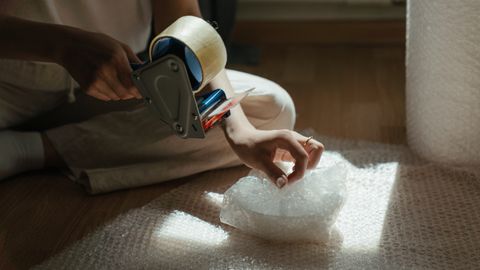
Bubble wrap traps air in sealed plastic bubbles. When the parcel is knocked, the bubbles compress and spread the shock. A layer of large bubbles gives a deep cushion in a single turn.
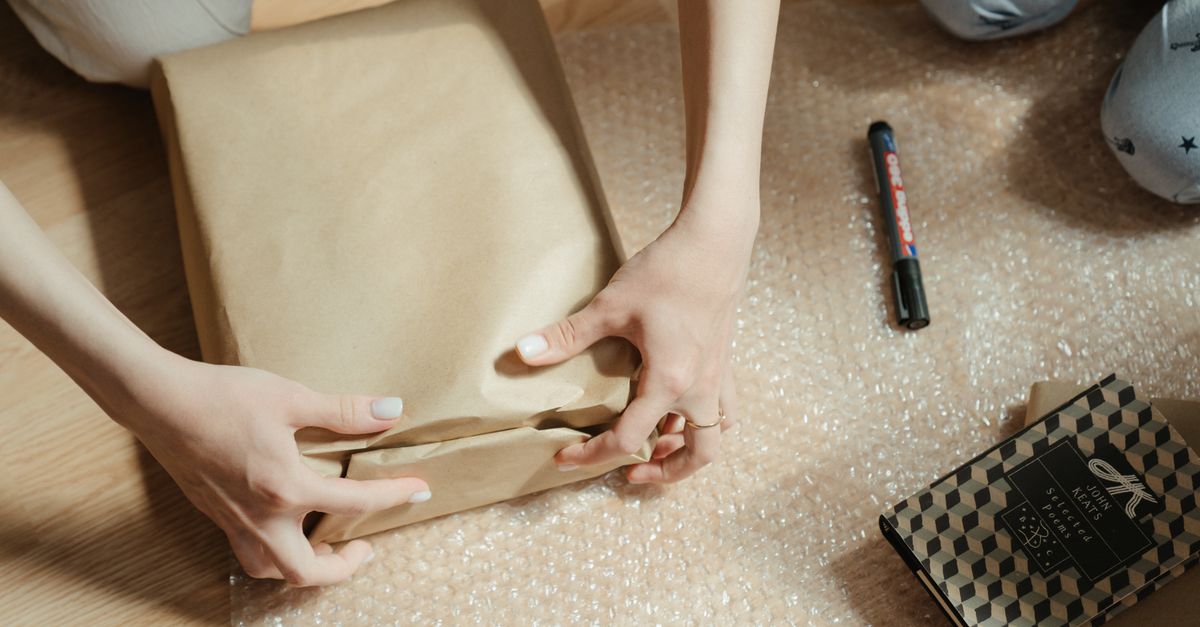
Honeycomb paper is kraft paper with rows of cuts. When it is pulled, the cuts open into angled cells. The cells bend under a knock, the wrap holds the product away from the box wall, and the layers lock into each other so the wrap stays on without tape. Our guide on how honeycomb paper works explains this in more detail.
So bubble wrap protects mainly with air.
Honeycomb protects with paper structure and with grip.
Side by side
| Factor | Honeycomb paper | Bubble wrap | Better choice |
|---|---|---|---|
| Everyday fragile items (jars, mugs, boxed goods) | Protects well with enough turns and a fitted box | Protects well | Either, test both |
| Very heavy or very fragile items | Needs a heavier grade, more turns and a careful test | Large bubbles give a deep cushion in one layer | Often bubble wrap, or foam |
| Wet or humid routes | Paper loses strength when it gets wet | Water does not affect it | Bubble wrap |
| Scuffs on glossy surfaces | Good, add tissue for very glossy finishes | Good | Either |
| Staying wrapped without tape | Layers grip each other | Needs tape | Honeycomb |
| Seeing the product through the wrap | No | Yes, with clear wrap | Bubble wrap |
| Storage before use | Flat roll, about 1.6 times longer once expanded with our cut | Arrives at full volume | Honeycomb |
| Speed at the bench | Pull, tear and wrap, no tape | Cut, wrap and tape | Usually honeycomb, measure it |
| Recycling by the customer | With paper, where paper is collected | Plastic film collection varies by area | Usually honeycomb |
| UK Plastic Packaging Tax | Plain kraft is not plastic | Plastic packaging, unless 30% recycled content or more | Honeycomb |
Notice the storage line. Our standard trade roll is 250 m flat, which expands to about 400 m of wrap. Bubble wrap ships with its air already inside, so a pallet of bubble wrap holds far fewer metres than a pallet of flat honeycomb. For an importer paying for container space, that matters.
Where bubble wrap does better
I would choose bubble wrap, or test it very seriously, in four cases:
- The parcel may get wet. Monsoon deliveries, open loading docks and long sea routes with condensation all weaken paper. Our guide on storage and humidity explains why paper and water do not mix.
- The item is very heavy for its size, such as a stone sculpture or a cast-iron pan. A deep air cushion, or a foam insert, often protects better than paper.
- The item is extremely fragile and valuable, such as thin laboratory glass or an antique. Here I would not trust any single material without a proper drop test.
- The product must stay visible, for example so a warehouse can scan a barcode without unwrapping it.
There is one more case. If your customers reuse bubble wrap at home and like it, that is a real benefit too.
I would not dismiss it.
Where honeycomb paper does better
- The parcel should be plastic-free. With honeycomb wrap, paper void fill and paper tape, every part goes into paper recycling.
- Packers waste time on tape. Honeycomb grips itself, so a packer wraps and moves on.
- Storage space is tight. Flat rolls take less room per metre of wrap.
- The brand wants a paper unboxing. Kraft honeycomb, or one of our colours, looks deliberate. A plain bubble-wrapped product rarely does.
- You import or make plastic packaging in the UK and pass the 10 tonne threshold. Our post on the UK Plastic Packaging Tax explains the tax and what a switch really changes.
Run your own test
Do not switch on my word, or anyone's. A simple test takes one afternoon:
- Pick your three most damaged products from the last 6 months.
- Pack 3 units of each with bubble wrap, your usual way, and 3 units with honeycomb paper, using the same boxes.
- Weigh each packed parcel and time each wrap with a stopwatch.
- Drop each box from waist height onto a hard floor: once on the base, once on a corner, once on the longest edge.
- Open them all and record any damage, including scuffs.
- Leave one honeycomb parcel in your dampest storage area for a week, then drop it again.
If honeycomb fails on one product and passes on the rest, use it on the rest.
You do not have to choose one material for the whole range.
What switching usually involves
A switch is not just a new roll on the bench. Packers need a dispenser set to the right tension, a standard number of turns per product, and possibly different box sizes. Our guide on choosing the right box size covers the boxes, and switching a warehouse from bubble wrap covers the rollout.
One pattern we have seen many times: buyers who leave us for a cheaper, weaker roll usually come back. Weak paper tears, packers wrap twice, and usage per order goes up. So when you compare, compare a good honeycomb roll against good bubble wrap, not the cheapest of each.
Samples for your test
Tell us the three products you plan to test, with their weights and box sizes, through the contact page. We will send sample rolls in a suitable width and two grades, so your comparison is fair to both materials.
Questions buyers ask
Is honeycomb paper as protective as bubble wrap?
For most everyday fragile products, such as glass jars, mugs, candles and boxed goods, it protects well when you use enough turns and a box that fits. For heavy or very fragile items, or anything that may get wet, I would test carefully, and sometimes bubble wrap is the safer choice.
Can I use both in the same parcel?
Yes. Some sellers use a layer of bubble wrap inside for a delicate part and honeycomb outside. It works, but your customer then has plastic and paper to separate, and you cannot call the parcel plastic-free.
Which is cheaper?
Compare cost per parcel, not per roll. Measure how many metres each material uses on your top products, add the time to wrap and tape, and the storage space. The answer changes from product to product.