One packaging standard for all your sales channels: Amazon, your own site and wholesale
Build one packaging standard that works on Amazon, your own website and wholesale: a base pack per product, channel layers on top, and one paper spec.
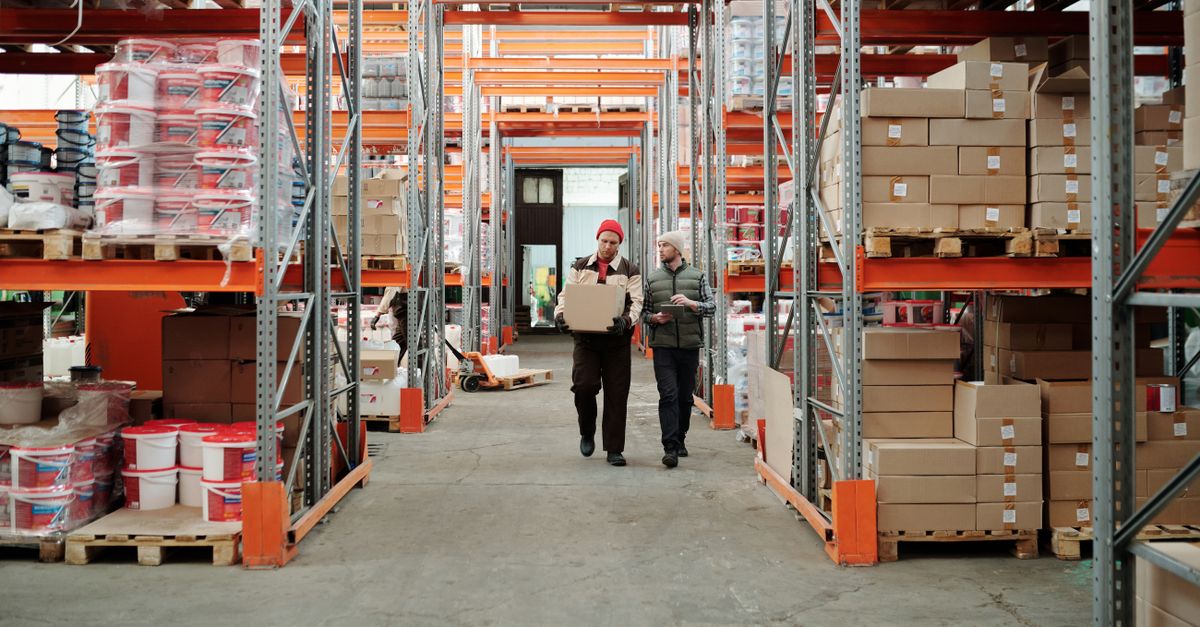
To build one packaging standard across Amazon, your own website and wholesale, design one base pack per product that passes the test of your strictest channel, then add a thin layer for each channel on top. For most fragile products, the base pack is the product in its own six-sided box, held still with honeycomb paper, with the barcode on the outside. One paper spec, one drop test and one recipe card per product keep every bench packing the same way.
Most multichannel sellers do not set out to have three packing methods. It just happens.
The Amazon packing gets built for the fulfilment centre rules. The website packing gets built for the unboxing. The wholesale packing gets built the night before the first retailer order goes out. A year later, the same mug is packed three ways, on three benches, from three rolls of paper, by three people who each think theirs is right.
That is expensive, and it breaks easily when someone is on leave.
I think it is also unnecessary.
We make honeycomb paper in Jaipur, on our own lines, and we supply it by the pallet and the container to 20+ countries. A buyer with one standard usually orders one or two paper specs, which is easier for them and for us. But the real benefit is on their side, so this is the way I would build it.
Why build to the strictest channel?
Because a pack that passes the hardest test passes the easier ones too. I would rather teach one strict method than three loose ones.
For most sellers, the strictest written rules come from Amazon FBA. The Amazon pages for the US marketplace ask for fragile units to be bubble wrapped or boxed, for the unit to survive a 3-foot drop test, and for a barcode that scans without unwrapping. Those rules are on the Product packaging requirements, Boxing requirements and Fragile products pages. Amazon updates them, and other marketplaces have their own versions, so read the current page for each.
Your own website has no written rule at all. But a broken item there costs you the product, the postage and the customer, so it deserves the same protection.
The base pack
The base pack is what every unit of a product looks like before any channel touches it.
- The product, with tissue first if it has a glossy, painted or soft finish.
- Two or three turns of honeycomb paper, with an extra turn on the weak point (a handle, a spout, a rim, a corner).
- A six-sided box that fits closely and does not give way when you press its sides.
- The ends filled, so nothing moves when you shake it.
- A scannable barcode on the outside of the box, never on the paper.
This one pack does three jobs. It counts as boxed prep for FBA. It is the inner pack of a website parcel. And it is the unit that goes into a case pack for a retailer.
Honeycomb paper suits the base pack because the cells lock onto each other and onto the product. The wrap stays put without tape, so the pack is the same whoever builds it.
The channel layers
Once the base pack exists, each channel only adds a thin layer.
| Channel | What sits on top of the base pack | Rules to read |
|---|---|---|
| Amazon FBA | FNSKU label if needed, then a carton with 2 inches of cushioning to the walls, within 25 x 25 x 36 inches and 50 lb | Amazon Shipping and routing requirements |
| Amazon orders you ship yourself | A shipping box with the gaps filled | The A-to-z Guarantee on damaged items |
| Your own website | A shipping box, an insert card, and colour if your brand uses it | Your own damage and returns policy |
| Wholesale to shops | Base packs in a case, a carton label with your SKU and the retailer's codes | Each retailer's supplier manual |
| Etsy, eBay and other marketplaces | A shipping box with the gaps filled | The current seller policy on damage for each marketplace |
The FBA carton has its own list of approved and banned packing materials. Full sheets of paper are approved. Packing peanuts, shredded paper and crinkle wrap are not. Our post on FBA prep with paper packaging covers the carton in detail.
One drop test for every channel
I would adopt one house test and use it for every product, whatever the channel. The simplest choice is the one Amazon already describes on its fragile products page: five drops from 3 feet onto concrete, on the top, the bottom, the largest side, a bottom corner and the longest bottom edge.
In my view, a base pack that survives that will survive a website parcel or a retailer carton far more often than not.
And you only have one test to teach.
Write each result on the product's recipe card, with the date, the paper grade and the number of turns. Re-test when anything in the pack changes, including the paper supplier.
One paper spec
Pick one main width and grade that suits most of your range, and write it down. We make eight standard widths, from 100 to 500 mm, and I would still tell most sellers to start with one. Add a second only if you have a real reason, such as a narrow roll for small items.
- Width, for example 380 mm (15 inch) for mugs, bottles and frames.
- Grade in GSM, for example 80 GSM, or heavier if your products are heavy.
- Flat length per roll, for example 250 m flat.
- Colour of the base pack paper. Natural kraft is the simple choice.
- FSC claim and certificate code, if you make any FSC claim to your customers.
The same roll then sits on every bench, in every channel. Our GSM guide helps you choose the grade, and our post on what to write on a purchase order turns this list into an order your supplier can be held to.
A worked example: one mug, three channels
Say you sell a stoneware mug on Amazon FBA, on your own website, and to a few gift shops. Here is how one recipe card might look. The details are an example, not a rule.
- Base pack: mug filled with paper, handle wrapped once, then three turns of 380 mm, 80 GSM honeycomb, in a close-fitting six-sided box, barcode outside. Passed the five-drop test on the date written.
- FBA layer: an FNSKU label if your listing needs one, 12 base packs to a carton with 2 inches of paper between packs and walls.
- Website layer: one base pack in a shipping box, ends filled, insert card on top.
- Wholesale layer: 6 base packs to a case, carton label with your SKU and the shop's product code.
One mug, one base pack, three thin layers. A new packer learns the base pack once and the layers in an afternoon.
Who owns the standard?
Somebody has to.
Without a named owner, I have no doubt the standard will drift within months. Recipe cards go missing, a packer finds a shortcut, and a new box arrives that nobody tested.
The owner keeps the recipe cards, runs the drop tests, approves any change of box or paper, and reads the damage log every month. In a small business, that may be the founder. In a bigger one, it is usually the operations lead.
Where we fit
We supply honeycomb paper from 100 to 500 mm wide and 50 to 120 GSM, in natural kraft, white and five colours, and we can put your own brand and SKU codes on the cartons. If you want one paper for every channel, send us your products and your channels through the contact page. We will suggest one main width and grade, and send samples so you can run your house drop test on them first.
Questions buyers ask
Can I use the same box for Amazon and my own website orders?
Yes, and I think you should. The six-sided unit box with the product held still inside works as FBA unit prep and as the inner pack for a website parcel. What changes is the outer layer. Amazon gets an FBA carton, and your own customers get a shipping box with an insert card.
Do retailers have their own packaging rules for wholesale orders?
Many large retailers do, usually in a vendor or supplier manual covering carton sizes, labels and pallets. Ask each wholesale customer for theirs before your first order. Your base pack rarely needs to change, but the outer carton and its labels often do.
Should I use coloured honeycomb paper across every channel?
I would keep the base pack in one neutral paper and put colour only where a customer actually opens the box, such as your website orders. One paper in the base pack means one roll on every bench and no mix-ups. Colour can be its own layer.