Amazon FBA prep with paper packaging: a bench checklist for fragile units
Prep fragile units for Amazon FBA with paper: choose the prep type, build the unit box, run the 3-foot drop test, and pack a carton that passes receiving.
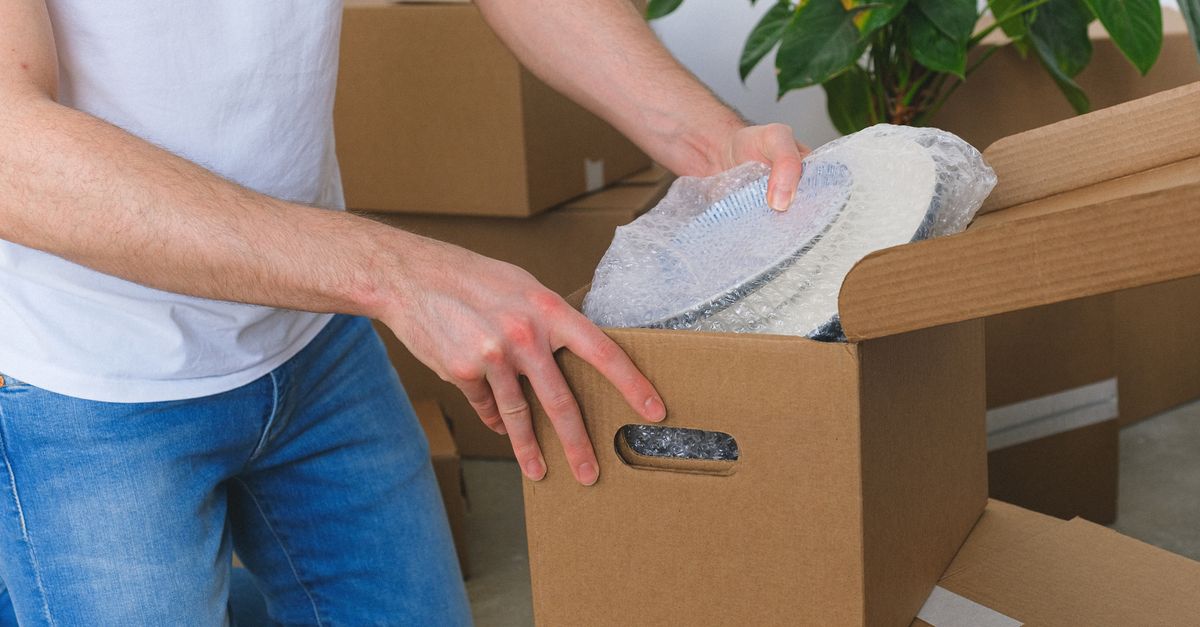
To prep a fragile unit for Amazon FBA with paper, put the product in a six-sided box that does not give way when you press it, hold it still with honeycomb paper so nothing moves, seal it, and put a scannable barcode on the outside. Then drop that unit five times from 3 feet onto concrete. If it survives, pack the units into a carton with 2 inches of paper cushioning against the walls.
That is the whole method. The rest of this post is the checklist I would hang above the bench.
I am writing it because the job has moved. From 1 January 2026, Amazon stopped offering prep and item labelling for FBA shipments in the US, as its Selling Partner API changelog states. Every fragile unit now has to arrive at the fulfilment centre already prepped.
Someone on your side does it, every time.
All the rules here come from the Amazon Seller Central help pages for the US marketplace, as they read in October 2026. Amazon edits them, and other marketplaces have their own versions. Open the current page before you lock your method.
If you first want to know whether honeycomb paper is acceptable to Amazon at all, read our post on honeycomb paper for Amazon sellers. This one assumes you have decided, and now need to do it well.
Step 1: which prep does this unit need?
I would answer this before touching any paper. Amazon gives a prep guidance table by product type. For anything glass or fragile, it says bubble wrap or a bubble bag, or a protective overbox, secured, able to survive a drop on a hard surface, with a barcode that scans.
Paper fits the box route.
So for each SKU, I would ask three questions.
- Does the product already come in a rigid six-sided retail box? If yes, the honeycomb goes inside it, around the product.
- If not, can you put it in one? A plain carton the right size counts.
- Is the product also a liquid, small, sharp or sold as a set? Each of those adds its own prep on top. Amazon says a unit that falls under several categories must meet all of them.
Sharp products are the exception. Amazon says bubble wrap is not effective for them, and paper is no better. They need cut- and puncture-resistant packaging.
Step 2: build the unit box
The Boxing requirements page lists what the box must do. In bench language:
- The box has six sides and does not give way when you press any side.
- The product cannot be seen or touched from outside.
- The contents are secured in place. Shake it. If you hear the product, it is not secured.
- The box is sealed with tape, glue or staples.
- A product over 10 lb goes in a double-wall corrugated box.
- The outside carries a scannable product barcode, or an FNSKU label.
Honeycomb paper does the third job, and it is the job we design it for. Wrap the product in two or three turns, so every face and corner is covered, and then fill any gap left at the ends of the box. The cells grip each other, so the wrap stays shut without tape.
Put the barcode on the box, never on the paper.
A label stuck to open honeycomb cells will not lie flat, and Amazon asks for a barcode that scans without unwrapping. The same applies to expiry dates. Amazon wants them on the outside of the prep, in MM-DD-YYYY or MM-YYYY format.
There is one more thing to know for glass bottles. Paper cushions a bottle, but it does not stop a leak. Amazon asks for a cap seal on fragile liquids that leak, and over-boxing for hazardous liquids in glass over 4.2 oz. Honeycomb paper sits inside that over-box. It does not replace it.
Step 3: run the 3-foot drop test yourself
Amazon does not run this test for you.
The Fragile products page says you must test your packaging, and that Amazon does not perform the test.
The method on that page is five consecutive drops from 3 feet onto concrete, with one test unit surviving all five. Damage to the box is acceptable, as long as nothing leaks and the product itself is intact.
I would keep a record like this for every SKU:
| Drop | Face | Box after drop | Product after drop |
|---|---|---|---|
| 1 | Top | ||
| 2 | Bottom | ||
| 3 | Largest side | ||
| 4 | Bottom corner | ||
| 5 | Longest bottom edge |
We drop test our own samples before they leave Jaipur, so I know how dull this step feels. It is still the cheapest test you will ever run.
Use a tape measure for the 3 feet (about 91 cm). Do not guess it from your waist. Do it on real concrete, not on the carpet in the office. Open the unit after the fifth drop, not after each one, because Amazon counts the five drops as one test.
If the unit fails, add turns or move to a heavier grade, and test a fresh unit. If it still fails, over-box it. The boxing page says a fragile item that failed the drop test must pass the test again after boxing.
Write the date, the paper grade, the number of turns and the result on the sheet. Then take a photo of the packed unit before you seal it.
Step 4: pack the carton you send to Amazon
The carton has its own rules, on the Shipping and routing requirements page.
| Carton rule | What the page says |
|---|---|
| Box type | Rigid, six-sided, flaps intact. A new single-wall carton with a burst or crush stamp is recommended |
| Cushioning | 2 inches between each item and the inside of the box. Not needed for a manufacturer's case pack |
| Approved packing materials | Bubble wrap, full sheets of paper (heavy kraft is best), inflatable air pillows, polyethylene foam sheeting |
| Banned packing materials | All packing peanuts, foam strips, crinkle wrap, shredded paper, thermocol chips, Styrofoam |
| Size | No more than 25 x 25 x 36 inches for boxes of standard items |
| Weight | No more than 50 lb, with exceptions for single heavy items |
| Outside | No string, straps or plastic or paper over-wrap, and boxes are not bundled together |
| Final check | Shake it gently. Nothing should move |
Honeycomb paper goes in as cushioning, in full lengths, not torn into small pieces. A carton full of torn scraps starts to look like the shredded paper Amazon bans, and I would not want a receiving associate to make that call.
A worked example: sizing the carton
Say you send 12 boxed ceramic mugs, each in a 4.5 inch cube box. The numbers are only for the example.
Read literally, the page asks for 2 inches of cushioning around each item and the same against the walls. So lay the 12 boxes out three long, two wide and two high, with a 2 inch gap between boxes and against every wall.
- Length: 3 boxes x 4.5 in + 4 gaps x 2 in = 21.5 in.
- Width: 2 boxes x 4.5 in + 3 gaps x 2 in = 15 in.
- Height: 2 boxes x 4.5 in + 3 gaps x 2 in = 15 in.
So you need a carton with about 21.5 x 15 x 15 inches inside. That is well under the 25 x 25 x 36 inch limit. Weigh the packed carton, because 12 mugs, 12 boxes and the paper add up quickly, and the limit is 50 lb.
The surprise for most sellers is how much space the cushioning takes. In this example, the gaps take more room than the mugs do.
Plan your carton sizes from the cushioning rule, not from the product.
Step 5: set up a prep bench that keeps up
Prep is repetitive, so the bench decides your speed. This is what I would put on it.
- One table-top dispenser per packer, with the roll width matched to the unit box. Our dispenser guide explains the brake and the sizes.
- Flat unit boxes in the sizes you use, within arm's reach.
- A label printer for FNSKU labels, and a pad of "Sold as set" stickers if you sell sets.
- A taped square on the floor at 3 feet, for spot drop tests.
- A printed pack recipe for each SKU: box size, paper grade, number of turns, and a photo of a finished unit.
- Rolls stored off the floor and in their wrapping. Damp paper tears at the slits, and a prep room near a loading door gets damp. Our post on storage and humidity has the details.
If you use a prep centre, the recipe card matters even more. They pack your units alongside other sellers' units.
They will follow a clear card and guess at a vague one.
Common prep mistakes with paper
- The product rattles in the unit box because the paper was wrapped loosely and not filled at the ends.
- The barcode was stuck on the wrap, so it does not scan.
- The carton was filled with scraps of torn paper instead of full lengths.
- A heavy product above 10 lb went into a single-wall box.
- The drop test was done once, on a new design, and never again after the paper supplier changed.
The last one is the quiet one, and I have seen it more than I would like. A cheaper roll that is lighter than its label can fail a test the old roll passed. Buyers who switch to a cheaper roll often come back to us for that reason, because packers start wrapping twice. Re-test whenever the paper changes, whoever it comes from.
Where we fit
We make honeycomb paper in Jaipur, on our own lines, and we check every lot for GSM, roll weight, moisture and cut quality, so the roll you tested against is the roll you get. If you prep enough units to buy by the pallet, send me your unit box sizes and your heaviest fragile product through our contact page. We will send a sample grade, and you can put it through the five drops before you change anything.
If it fails, I want to know.
Questions buyers ask
Can I reuse the cartons my supplier sent me for an FBA shipment?
Yes, if the box is still rigid, six-sided and has its flaps. Amazon asks you to remove old shipping labels and cover or black out any old barcodes, so the wrong one is not scanned at receiving. I would not reuse a carton that has been wet, or one that has already been crushed at a corner.
Do I have to drop test every SKU?
I would test every shape and weight, not every listing. Five colours of the same mug in the same box need one test. A new size, a heavier version or a new box needs its own. Write the result down, because you may need it if Amazon questions the prep.
Can my prep centre use honeycomb paper for my units?
Yes, if you tell them to and tell them how. A prep centre follows your instructions, so give them a one-page pack recipe with the box, the number of turns and a photo of a finished unit. Without that, each packer guesses.
What happens if Amazon finds a prep problem at receiving?
Amazon says it may refuse, return or repackage the stock at your expense, and that non-compliant units are not eligible for reimbursement. It can also charge inbound defect fees and block future shipments. It is far cheaper to drop test a unit at home.