Sourcing honeycomb paper: India or China?
An Indian manufacturer's honest comparison of honeycomb paper from India or China: duty, freight routes, paper quality and the checks that matter.

I make honeycomb paper in India, so you should read this with that in mind. I will still try to be fair, because a buyer who picks the wrong supplier for the wrong reason is bad news for every honest factory, including ours.
Here is the short answer. The country matters less than the factory. There are good and poor honeycomb rolls in both India and China.
Choosing a supplier by country is a bit like choosing a cook by city. Lucknow has wonderful cooks, and it also has bad ones. You still have to taste the food. The real differences between the two countries are duty and extra tariffs in your market, the freight route to your port, and how easy it is to check the supplier. Paper quality has to be tested, roll by roll, wherever it comes from.
What actually differs between India and China?
Four things differ by country. Everything else differs by factory.
| Factor | Differs by country? | What to do |
|---|---|---|
| Import duty and extra tariffs in your market | Yes | Ask your customs broker for the rate on each origin |
| Trade agreements you can use | Yes | Check whether your country has an agreement with India, China or both |
| Freight route and transit to your port | Yes | Get freight quotes for both origins to your port |
| Currency and payment practice | Partly | Ask each supplier which currencies they quote in |
| Paper GSM and strength | No, by factory | Test samples |
| Flat length honesty | No, by factory | Weigh a roll |
| Cut quality | No, by factory | Pull it through your dispenser |
| FSC certificate and scope | No, by factory | Check the code on FSC Search |
| Export packing against moisture | No, by factory | Ask how rolls and pallets are wrapped |
Duty and tariffs: the difference that can decide it
The same honeycomb roll can carry a different duty depending on where it was made. This one line can outweigh any price difference between two suppliers.
The US is the clearest example in 2026.
- US Customs ruling NY N319560 (CBP, June 2021) classified honeycomb paper from China under 4823.90.8680 and applied the China Section 301 duty under heading 9903.88.03, on top of a general rate that is Free.
- In July 2026 the US Trade Representative added new Section 301 duties on 60 economies. The USTR notice in the Federal Register (28 July 2026) set 12.5% on products of China and 10% on products of India, from 24 July 2026.
So in the US, Indian honeycomb paper is not duty-free. It is simply carrying fewer layers than Chinese paper at the moment. Our guide on importing honeycomb paper into the USA has the detail.
In other markets the picture is flatter. The UK and EU both show 0% third-country duty on the usual honeycomb paper code, so origin makes no duty difference there. We are not aware of any EU or UK anti-dumping measure on heading 4823 from China as of October 2026, though your broker should confirm it. Australia has trade agreements with both countries: the China-Australia FTA since 2015 and the India-Australia ECTA since 29 December 2022. China, Australia and New Zealand are also members of RCEP, which India left in 2019, according to the New Zealand Ministry of Foreign Affairs and Trade.
I am not going to tell you that duty always favours India. It does not. It depends on your country, your commodity code and the agreements in force on the day your goods arrive. Please get the rate for both origins from your customs broker before you compare prices.
Freight: compare quotes, not maps
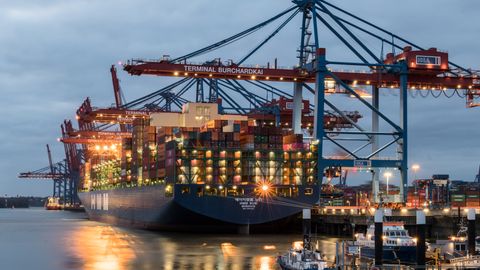
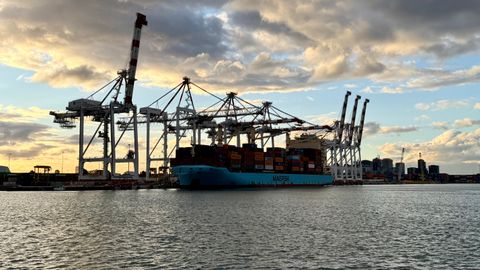
Our loading port is Mundra, on India's west coast. For buyers in the Gulf, East Africa and Europe, the sea route from India's west coast is naturally shorter than from China's east coast. For buyers on the Pacific side, China's ports may be closer.
Distance is only part of it. Shipping lines, transhipment hubs and the number of sailings on your route all change the real transit time and rate. Ask your forwarder to quote both origins to your port, on the same date, for the same container size.
Honeycomb paper fills containers by space, not weight, so freight is a large part of what you pay per roll. A small difference in freight can matter more than a small difference in the roll price. Our guide to landed cost per roll shows how to put it all in one number.
Paper quality: test it, wherever it comes from
Kraft paper differs by mill, fibre and recycled content, and a die-cut cannot fix a weak sheet. So the question is never "Indian paper or Chinese paper". It is "this supplier's paper, at this GSM, on my products".
Run the same checks on every sample.
- Weigh a roll and work out its flat length from the weight.
- Cut three 10 cm squares from the flat paper and check the GSM.
- Pull 5 metres through your dispenser at real packing speed and count the tears.
- Wrap 20 of your real products and drop-test a few boxes.
- Leave a piece overnight in a damp corner and pull it again.
The most common failure I see is not the country. It is weak paper. Buyers who switch to a cheaper roll often come back to us, because the paper tears, packers wrap twice and usage per order goes up. That pattern is the same whichever country the cheap roll came from.
Our guide to what to write on a honeycomb paper purchase order has the full sample test.
Certificates: check them the same way
An FSC claim is only real if the supplier's certificate is valid, covers the product and appears on the invoice with the certificate code. The check takes ten minutes on the public FSC Search database, and it works for any country.
We hold FSC chain of custody certificate SGSHK-COC-400324, audited by SGS. Please check it on FSC Search before you trust it, the same way you would check anyone else's.
Talking to the supplier
This one is personal, and you should judge it yourself on a video call.
Ask the same five questions to each supplier. How do you test raw paper? What do you check on every lot? How do you pack against moisture? What happens if the bulk does not match the sample? Who will I speak to when there is a problem?
The answers tell you more than a price list. A supplier who answers in specifics is usually one who does the checks.
Where India may suit you, and where it may not
I will be honest about both sides.
India may suit you if duty in your country favours Indian origin, if your port is on a short route from India's west coast, if you want a second source alongside an existing one, or if you value working in English with a supplier who answers to a family that has run the business since 1995.
India may not suit you if your market charges more on Indian goods than Chinese ones, if your port is far better served from China, or if you need a product we do not make. We make honeycomb paper in standard widths from 100 mm to 500 mm, in seven colours, plus sheets and mailers. If you need something outside that, I would rather tell you than stretch.
A sensible way to decide
Do not decide on a price sheet.
- Write one specification.
- Get samples from your shortlist in both countries, labelled with the spec.
- Test them the same way, on the same day.
- Ask your broker for duty on each origin and your forwarder for freight on each route.
- Work out landed cost per flat metre, then per packed order.
- Approve two suppliers if you can, so one bad season does not stop your packing table.
If you would like to include us in that test, send your specification and destination port through our contact page. We will send samples with the specification written on each label, and you can test them side by side with anyone else's.
Questions buyers ask
Is honeycomb paper from China cheaper than from India?
Sometimes per roll, and not always per order. Compare landed cost per flat metre at the same GSM, including duty for your country, and then the paper used per packed order. A cheaper roll that tears costs more on the packing table.
Do Chinese and Indian factories use the same paper?
Not necessarily, and the same is true between two factories in one country. Kraft paper varies by mill, fibre and recycled content. Ask each supplier for the GSM, the fibre type and the FSC claim, and test the strength yourself.
Can I dual-source from India and China?
Yes, and many importers of packaging do. Approve one specification, test both suppliers against the same reference sample, and keep your product codes the same so your customers do not see a change.
Does country of origin appear on the roll or carton?
Many countries require imported goods or their packaging to show the country of origin. Check the marking rules with your customs broker, and put your requirement on the purchase order so the supplier prints it correctly.