Honeycomb paper for brass and metal decor: stopping scratches, and what it cannot stop
How to pack brass items for shipping: honeycomb paper against scratches and dents, a barrier layer against tarnish, and edge guards for cut metal.
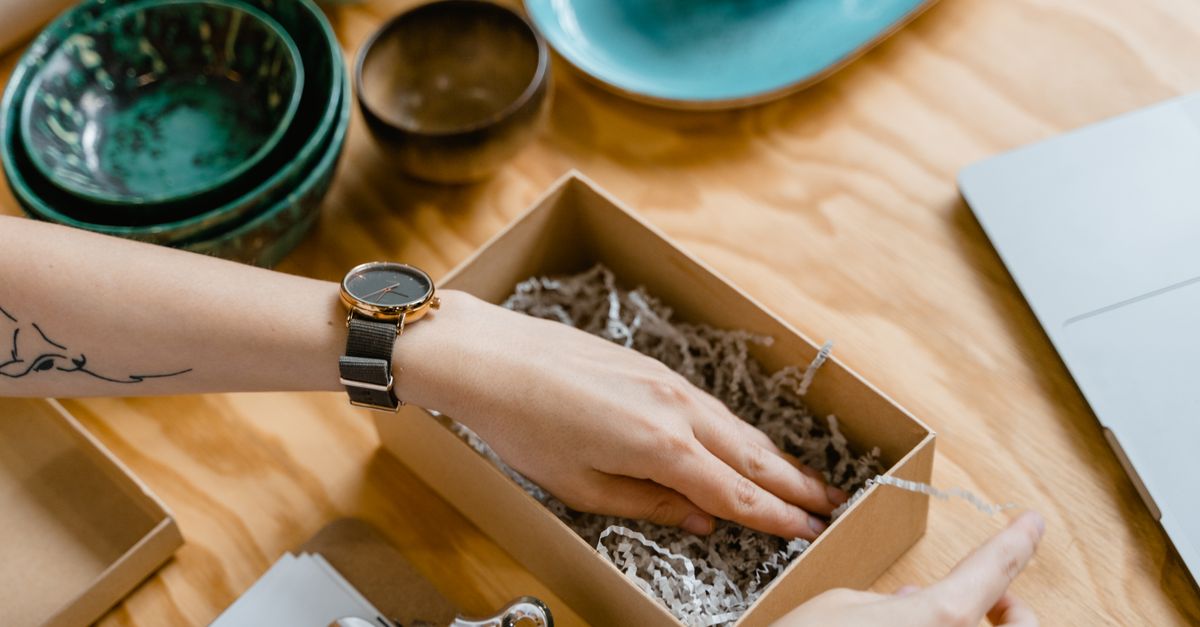
A brass bowl can survive a drop with no visible damage and still come back as a return. The customer opens the box, tilts the bowl towards the window, and sees a fine scratch across the polish.
The quick answer is yes for scratches and no for tarnish. Honeycomb paper is good protection against scratches and dents on brass and metal decor, because it keeps pieces apart, holds them off the box walls and takes up knocks. It is not protection against tarnish. On polished, unlacquered brass, copper or silver-plate, put acid-free unbuffered tissue or a polythene bag against the metal first, then the honeycomb. And cover any cut metal edges before you wrap, because they slice straight through paper.
I want to be honest about the tarnish part, because we make this paper in Jaipur and we would like you to buy it. Our honeycomb is kraft, which is made from wood pulp.
We do not sell it as an anti-tarnish paper, and I would not.
Scratches and tarnish are two different problems
They often get treated as one problem. They have different causes and different fixes.
| Problem | Usual cause | What fixes it | Does honeycomb help? |
|---|---|---|---|
| Scratches | Metal rubbing on metal, or grit trapped against the polish | Separate every piece, clean surfaces, a soft first layer | Yes |
| Dents | Knocks against the box or another piece | Cushion, and stop movement in the box | Yes |
| Tarnish | Sulphur compounds in the air, moisture, skin oils | A barrier layer, dry conditions, gloves, shorter storage | No |
| Torn wrap | Sharp cut edges on sheet metal | Edge guards before wrapping | No |
So you need two layers of thinking. Honeycomb handles the physical side. The chemistry needs its own answer.
What conservators say about paper and metal
Museum conservators have written about this in detail. The Canadian Conservation Institute's note Storage of Metals (CCI Notes 9/2, revised 2007) gives three points that matter to anyone shipping polished metal:
- It advises avoiding wood and wood-pulp products near metals, because they release sulphur compounds and organic acid vapours.
- It recommends acid-free, unbuffered paper, or polyethylene, as safe wrapping.
- It warns that highly polished metals such as silver and copper are particularly sensitive to the oils and salts in skin, and recommends clean cotton or plastic gloves.
My reading of this is practical. That guidance is written for objects stored for years. A courier parcel that is opened in five days is a far shorter exposure. But stock that sits wrapped in a warehouse for three months, through a humid season, starts to look much more like storage.
So my rule is simple.
If a polished, unlacquered piece might wait, give it a barrier layer.
Lacquered or unlacquered? Find out first
Some brass decor is lacquered, i.e., coated with a clear protective film after polishing, and some is not. Lacquer slows tarnish. Its weak point is scratching. Once the lacquer is scratched, the metal under it is exposed.
Ask your maker which finish each product has.
Do not guess from the shine.
- Lacquered pieces: plain tissue under the honeycomb, or honeycomb directly if the finish is tough. The job is scratch protection.
- Unlacquered polished pieces: acid-free unbuffered tissue or a polythene bag first, then honeycomb. The job is scratch protection and tarnish control.
- Antique or oxidised finishes: tissue, then honeycomb. Rubbing is the risk, more than tarnish.
Our guide to tissue interleaf with honeycomb paper explains how to add the tissue layer without slowing the bench.
Step by step: a polished brass bowl
- Put on clean cotton gloves before you touch the polished surface.
- Wipe the bowl with a dry, soft cloth to remove dust. Grit trapped under a wrap is what scratches.
- Place a sheet of tissue inside the bowl and wrap one around the outside. For an unlacquered bowl that may wait in stock, use acid-free unbuffered tissue or slip it into a polythene bag.
- Fill the inside of the bowl lightly with a honeycomb offcut.
- Wrap the bowl in two turns of honeycomb paper, three for heavier pieces.
- Pack it so it cannot touch another metal piece, even through the paper.
For a nested set of bowls, put a full honeycomb layer between each bowl. One thin sheet is not enough when the weight of three bowls presses on it for a week.
Heavy cast pieces and sharp edges
Cast brass figures and heavy candle stands bring weight and projecting parts. Wrap the projecting parts first with a short strip of folded honeycomb, then wrap the whole piece. I would use heavier paper here, 100 or 120 GSM, because heavy metal crushes light cells.
Sheet-metal wall art is the hardest case. Its cut edges go through paper like a knife. Fit cardboard edge guards first, then use honeycomb on the faces to stop scratching. Honeycomb alone will not do this job, however many turns you use.
Worked example: lacquered or not?
Picture an online shop that sells brass planters and candle stands, holding about three months of stock in a warehouse in a humid coastal city. This is an example, not a case study.
The shop checks with its makers and learns that the planters are lacquered and the candle stands are not. The planters get two turns of honeycomb straight onto the lacquer, packed so no two touch. The candle stands go into polythene bags with a small silica gel sachet, then two turns of honeycomb. Packers wear cotton gloves for the unlacquered line.
The shop then runs a simple check. It packs one candle stand the new way and one the old way, and leaves both in the warehouse for a month. Then it opens them side by side, next to the window.
Colour and presentation
Metal decor is often sold as a gift. A natural kraft wrap looks honest and earthy against brass. Black honeycomb paper looks dramatic against polished gold tones. We make honeycomb in natural kraft, white, black, blue, green, red and yellow, so you can test which suits your brand. Tissue underneath also gives a cleaner first look when the box opens.
We check every lot of our paper for GSM, moisture and cut quality before it leaves the plant. Moisture matters more than usual with metal, so ask any supplier how they check it.
A check you can do this week
Take one polished piece from each finish you sell. Pack each one the way you do today and leave them in your stock room for four weeks. Keep one unpacked piece of each finish in a closed drawer as a reference.
Then open everything in daylight and compare. You will know very quickly which line needs a barrier layer.
If you would like samples of our honeycomb in natural and black to try on your metal range, ask through our contact page. For the rest of a decor catalogue, our guide to packing home decor with honeycomb paper covers mixed orders, and our guide to packing handicrafts for export covers long sea journeys, where humidity matters even more.
Questions buyers ask
Will kraft paper tarnish brass?
Over a few days in a courier parcel, I would not worry. Over months of storage, it can add to the problem, because conservators advise keeping wood-pulp paper away from polished metal. If stock will sit wrapped for a long time, put a barrier layer between the metal and the kraft.
Can I wrap brass in newspaper?
I would not. Newsprint ink can rub off onto polished metal and onto your customer's hands, and it is a wood-pulp paper as well. Plain tissue under honeycomb is cleaner and looks far better when the box is opened.
Are anti-tarnish strips worth using?
For stock that will be stored for weeks or months, yes, but they work best inside a closed bag with the piece. In an open carton full of paper, the strip is trying to clean the air of the whole box.
Does silica gel help with brass and copper?
It helps when the piece is in a closed bag or a tight inner box, because it lowers the humidity around the metal. Loose in a big carton on a humid route, a small sachet does very little.